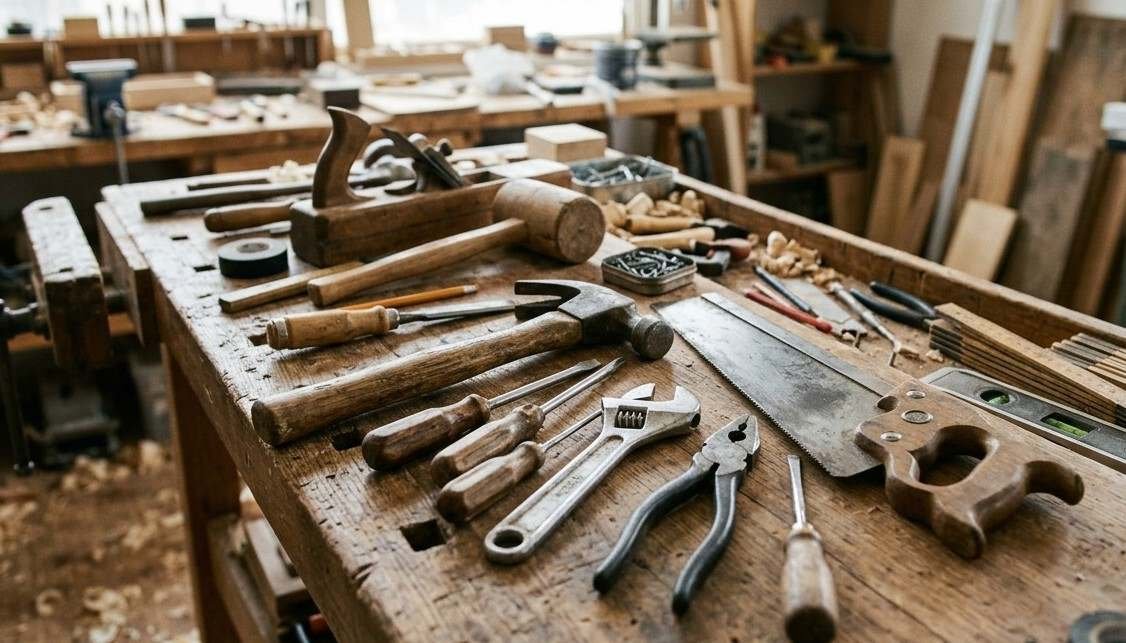
The seven essential industrial hand tools for a UAE workshop are a torque wrench, spanner sets, insulated pliers, a heavy-duty hammer set, precision screwdrivers, a measuring and marking kit, and a bench vise. Choose corrosion-resistant, standards-certified versions rated for high heat and dust.
Hand tools are manually operated implements designed to perform tasks like cutting, striking, measuring, and fastening without the need for an electric motor or engine. In the UAE, workshops face fifty-degree summers, fine desert dust, and coastal humidity that punish weak steel. Tool failure here is rarely dramatic. It shows up as rounded bolts, drifting calibration, and injured hands.
This hand tools list ranks the seven tools that carry the most operational weight, with selection criteria you can apply to any procurement plan.
What Makes Industrial Hand Tools Suitable for UAE Conditions?
Suitable industrial hand tools use chrome vanadium or chrome molybdenum steel, carry corrosion-resistant finishes, and meet recognized standards such as ISO or DIN. They resist heat expansion, dust abrasion, and humidity-driven rust common in Gulf facilities. Tools lacking these properties wear faster and create safety risks.
Apply this three-point check before purchase:
- Steel grade: look for chrome vanadium or chrome molybdenum stamping.
- Finish: prefer phosphate, black oxide, or chrome plating over bare steel.
- Documentation: demand standard markings and calibration certificates for torque tools.
What Are the Main Types of Hand Tools Used in Industrial Workshops?
The main types of hand tools fall into five functional groups: cutting, striking, measuring, fastening, and holding tools. Industrial workshops need all five groups to cover mechanical and electrical maintenance. The seven tools below cover all five groups, each with the specification that matters most in UAE conditions.
Which Hand Tools Does an Industrial Workshop Need Most?
An industrial workshop needs seven core tools: torque wrenches, spanner sets, insulated pliers, hammers, precision screwdrivers, measuring instruments, and a bench vise. Together they cover fastening, gripping, striking, measuring, and holding tasks across mechanical and electrical maintenance.
1. Torque Wrench
A calibrated torque wrench protects flanges, engine components, and structural bolts from under- or over-tightening. Choose a click-type model conforming to ISO 6789, with a certificate traceable to a recognized laboratory. Recalibrate every 12 months, since heat cycling shifts spring tension. Store it at its lowest setting.
2. Spanner and Wrench Sets
Combination spanners and adjustable wrenches handle most day-to-day fastening. Select double-hexagon profiles in chrome vanadium steel, and keep both metric and imperial sizes because imported equipment mixes standards. Avoid cheap adjustable wrenches with loose jaws, which round fasteners and slip under load.
3. Insulated Pliers and Cutters
Electrical maintenance demands pliers tested to IEC 60900, the international standard for insulated hand tools rated to 1,000 volts AC. Look for the double-triangle marking and replace any tool with nicked insulation. Add side cutters and long-nose variants for wire stripping and tight panel access.
4. Heavy-Duty Hammer Set
A balanced hammer set should include a ball-peen hammer, a dead-blow hammer, and a soft-faced mallet. Dead-blow designs reduce rebound when seating bearings and machined parts. Choose forged heads with fiberglass or steel handles, because wooden handles dry out and loosen in arid conditions. Inspect heads for mushrooming before each shift.
5. Precision Screwdriver Set
Screwdrivers fail quietly when tips deform and cam out. Specify S2 alloy steel tips with precision-machined profiles for Phillips, Pozidriv, Torx, and slotted fasteners. Magnetic tips speed up work in switchgear and control panels. Keep separate sets for electrical and mechanical use. Replace tips at the first sign of rounding.
6. Measuring and Marking Kit
Accurate work starts with reliable measurement. Equip each bay with a steel rule, a digital caliper, a combination square, and a spirit level. Prefer stainless steel instruments with etched graduations, since printed scales fade under sunlight and solvents. Verify calipers against gauge blocks quarterly, and log the results for audit purposes.
7. Bench Vise
A bench vise anchors every cutting, filing, and assembly task. Choose cast steel or ductile iron bodies with replaceable hardened jaws, and a swivel base for flexibility. Bolt it through the bench rather than clamping it. Apply rust-inhibiting oil weekly to the screw and slide, because dust and humidity combine into abrasive paste.
How Do You Choose Hand Tools Suppliers in UAE?
Choose hand tools suppliers in UAE that provide certified products, traceable calibration records, verifiable brand authorization, and consistent stock availability. Reliable suppliers also offer technical guidance on specifications and handle warranty claims promptly. Verify these points before placing any bulk order.
Building a Dependable Toolkit
Reliable hand tools reduce downtime, protect technicians, and keep calibrated work defensible during audits. Start with the seven categories above, verify standards and finishes, and retire damaged tools promptly.
Get the Right Hand Tools for Your Industrial Workshop
Need hand tools that arrive certified and ready for your workshop? Reality Building Materials Trading LLC, a hand tools supplier in UAE, can help you select suitable tools based on your workload, operating conditions, and compliance requirements.
Request a Tool QuoteFrequently Asked Questions
Which hand tools are most important for an industrial workshop?
Torque wrenches, spanner sets, and insulated pliers matter most because they affect safety, equipment integrity, and compliance records. Hammers, screwdrivers, measuring instruments, and a bench vise complete the core kit. Buy certified torque and electrical tools first.
How often should workshop hand tools be inspected and replaced?
Inspect tools visually before every shift and complete a documented review monthly. Recalibrate torque wrenches and measuring instruments every 6 to 12 months, depending on usage. Replace any tool showing cracks, mushrooming, worn jaws, or damaged insulation immediately.
Do industrial hand tools need special coatings in the UAE?
Yes, because coastal humidity, salt air, and fine dust accelerate corrosion and wear. Phosphate, black oxide, and chrome finishes slow rust, while inland workshops still need abrasion resistance against dust and heat. Store tools in sealed, ventilated cabinets with desiccant packs, and wipe them with light oil after moisture exposure.