Professionals in construction, automotive repair, and manufacturing rely on pneumatic tools because it delivers consistent torque, durability, and safety under demanding workloads. Understanding their mechanism helps buyers choose the right system, compressor capacity, and accessories.
This guide explains the engineering logic, components, performance factors, and real world applications so you can confidently evaluate tool options for workshop or industrial use.
What Are Pneumatic Tools?
Pneumatic tools are mechanical devices powered by compressed air instead of electricity or batteries. They convert stored air pressure into motion to perform tasks like fastening, drilling, grinding, or cutting.
Often called air powered tools, they are widely used in professional environments where reliability and high power output matter more than portability.
How Pneumatic Tools Work Step by Step
Understanding how pneumatic tools work is simple when broken into functional stages. Each stage converts energy from one form to another until motion is produced.
Air Compression
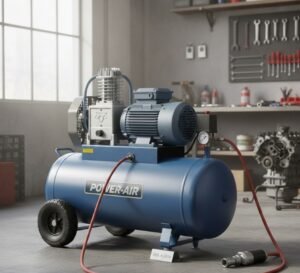
An air compressor draws in atmospheric air and compresses it into a storage tank, increasing pressure and energy density.
Air Delivery
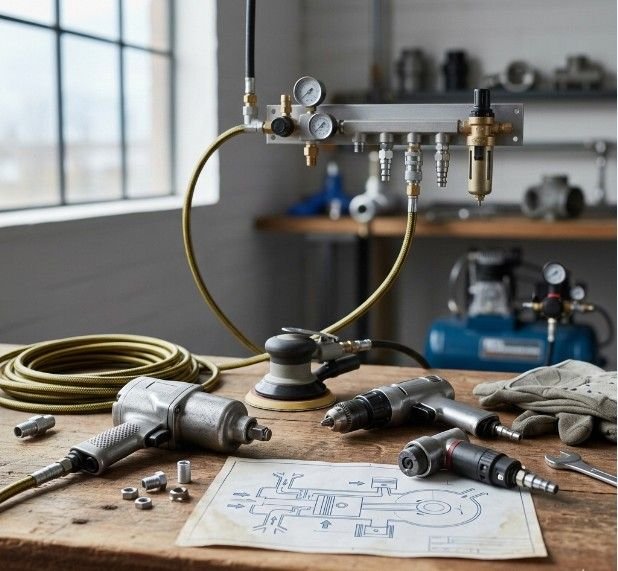
Pressurized air travels through hoses, filters, and regulators that stabilize flow and remove moisture or debris.
Trigger Activation
When the trigger is pressed, a valve opens and releases compressed air into the tool chamber.
Motion Generation
Air pressure spins a vane motor or drives a piston depending on tool design, producing torque or impact force.
Exhaust Phase
Used air exits through exhaust vents, preventing pressure buildup and preparing the system for the next cycle.
Core Components of a Pneumatic System
Every air driven setup relies on a coordinated system rather than a single device. Understanding these parts helps diagnose performance issues and optimize efficiency.
- Compressor that generates pressure
- Hose that transports air
- Regulator controlling output pressure
- Filter removing moisture and dust
- Lubricator reducing internal friction
- Tool motor producing motion
Industrial brands such as Ingersoll Rand and Chicago Pneumatic engineer these components to work seamlessly under heavy duty cycles.
Types of Pneumatic Tools
Different mechanisms produce different motion patterns, each suited to specific tasks.
Rotary Tools
These include air drills, grinders, and sanders that rotate continuously, ideal for polishing, shaping, or boring materials.
Impact Tools
Pneumatic impact wrenches and nail guns deliver short bursts of force, excelling in assembly lines and construction framing.
Reciprocating Tools
Tools like air hammers and chisels move back and forth rapidly, making them effective for demolition or metal shaping.
Advantages Over Electric Models
Professionals comparing pneumatic vs electric tools often prioritize power consistency and lifespan. Air systems provide steady torque because they do not rely on heat sensitive motors.
They also operate cooler and can run continuously without overheating. This makes them ideal for factories or workshops where downtime is costly.
Another benefit is safety. Air driven tools produce no sparks, which is why safety authorities like Occupational Safety and Health Administration recommend them for hazardous environments.
Performance Metrics That Matter
Two technical ratings determine whether a system will perform efficiently.
Pressure Rating
Correct PSI for air tools ensures enough force to drive the internal motor without damaging seals or components.
Airflow Capacity
CFM measures how much air volume the compressor can supply. Tools with higher consumption need larger compressors to avoid pressure drops.
Matching PSI and CFM prevents sluggish performance and pairing this with a quality air filter and regulator extends equipment life significantly.
Common Applications Across Industries
Pneumatic tools are widely used across industries because they deliver consistent power, durability, and operational safety in demanding environments. Their ability to perform repetitive tasks without overheating makes them especially valuable in professional settings where efficiency and reliability are critical.
- Automotive Workshops
Used for tightening bolts, removing lug nuts, spray painting, and engine assembly tasks where precision torque is essential. - Construction Sites
Ideal for framing, drilling, chiseling, and fastening applications that require strong impact force and continuous operation. - Manufacturing Plants
Commonly integrated into assembly lines for polishing, grinding, riveting, and automated fastening processes. - Woodworking Shops
Helpful for sanding, carving, stapling, and finishing surfaces with accuracy and smooth control. - Metal Fabrication Units
Used for cutting, shaping, deburring, and surface finishing, tools like the air angle grinder provide steady power output that improves production quality.
Because of their versatility and efficiency, pneumatic tools remain a preferred choice for professionals who need reliable performance, reduced downtime, and consistent results across industrial and commercial tasks.
Choosing the Right Pneumatic Tool Setup
Selecting equipment involves more than buying a tool. Buyers must evaluate compressor size, hose diameter, and duty cycle requirements.
If airflow is insufficient, even a high quality tool will underperform. Matching system capacity with tool demand ensures stable pressure and optimal productivity.
Professionals often calculate total CFM requirements for all tools running simultaneously, then select a compressor that exceeds that value by at least 25 percent for safety margin.
Safety and Maintenance Best Practices
Routine care significantly extends lifespan and ensures reliable operation. Air powered equipment is durable but still requires attention.
Lubricate moving parts regularly to reduce wear. Drain compressor tanks daily to prevent moisture buildup. Inspect hoses for leaks or cracks that could reduce pressure.
Proper storage and regulated pressure settings protect seals and internal motors from premature failure.
FAQs
What are pneumatic tools?
Pneumatic tools are powered by compressed air instead of electricity or batteries. They convert air pressure into mechanical motion for tasks like drilling, fastening, or grinding.
What are pneumatics and how do they work?
Pneumatics uses pressurized air to perform mechanical work. Air is compressed, stored, and released to drive pistons or motors inside tools or machines.
What are 5 examples of pneumatic systems?
Common pneumatic systems include air brakes, nail guns, air compressors, jackhammers, and spray guns. These systems rely on compressed air to generate motion, force, or control mechanisms.
What are pneumatic devices used for?
Pneumatic devices are used for drilling, fastening, sanding, cutting, and automation tasks. They are widely applied in automotive, construction, manufacturing, and woodworking industries.
Conclusion
Pneumatic tools are indispensable for professionals across automotive, construction, manufacturing, and woodworking industries. Their high power-to-weight ratio, consistent torque, and safety in hazardous environments make them superior to many electric alternatives. Understanding their components, operation, and proper maintenance ensures optimal performance, longer lifespan, and efficient workflows on any job site.
For companies seeking reliable and efficient industrial solutions in UAE, Reality Building Materials Trading LLC offers top-quality pneumatic tools, expert guidance, and dependable supply tailored to your operational needs.
Contact our pneumatic tool specialists for expert guidance, compatibility checks, and fast support to ensure you get the ideal compressed‑air solutions for your workshop or project needs.
Explore Related Guides for Tools, Materials, and Industrial Equipment
- Essential Oilfield Equipment and Their Applications: Maximizing Efficiency with Reliable Oilfield Equipment
- The Complete Hand Tools Guide: Types, Uses & Selection: Master every hand tool for precision, safety, and efficiency.
- What is an Air Compressor? Types and Their Industrial Uses: Learn how different air compressors work and their applications in industrial and workshop settings.
- Choosing the Right Fasteners for Your Construction Project: Understand which fasteners suit specific materials and structural requirements.
- Hand Tools vs. Power Tools: Which One Should You Use?: Compare manual and powered tools to select the best option for your projects.