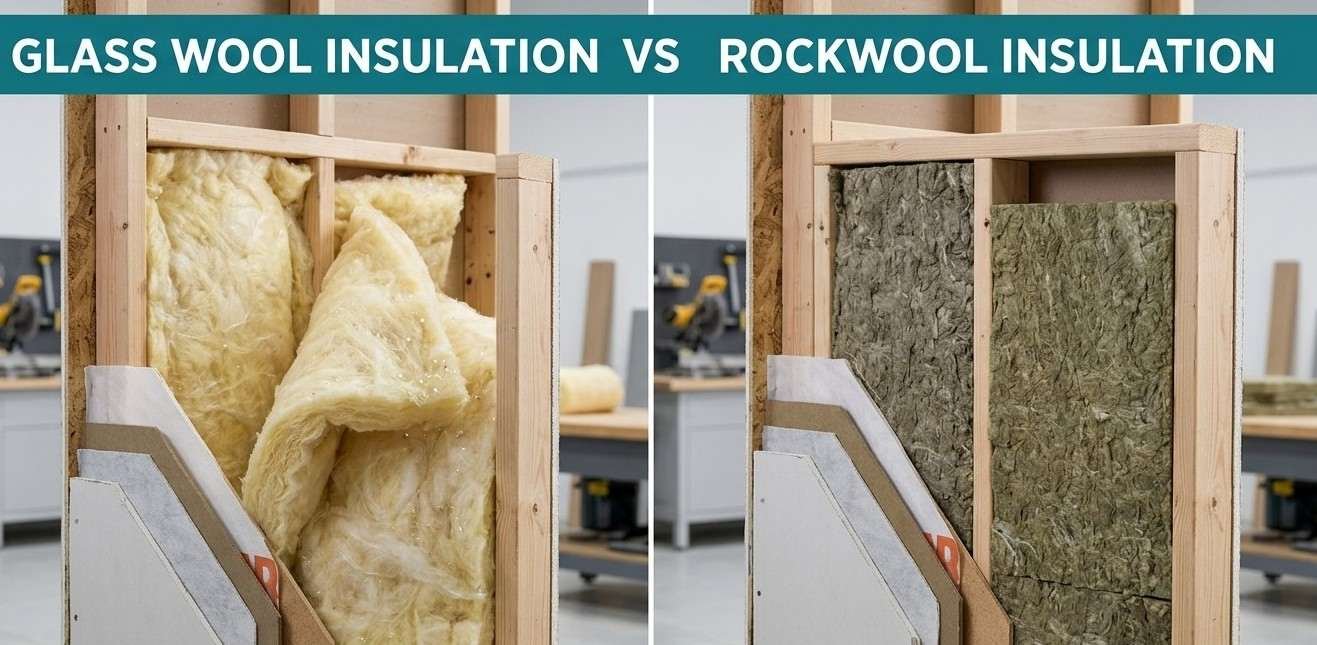
Choosing the right insulation material can improve energy efficiency, indoor comfort, fire safety, and sound control. Two popular options are glass wool insulation and rock wool insulation. Both are mineral wool products, but they differ in material composition, density, thermal performance, moisture resistance, and typical applications.
If you are comparing glass wool vs rock wool insulation, understanding these differences can help you select the right solution for residential, commercial, and industrial projects.
What Is Glass Wool Insulation?
Glass wool, also called fiberglass insulation, is made mainly from fine glass fibers. Recycled glass and other raw materials are melted at high temperatures and formed into lightweight fibers.
The fibers trap tiny pockets of air, which helps reduce heat transfer. Glass wool is available in rolls, batts, boards, and other forms.
Because it is lightweight and flexible, glass wool insulation is widely used in walls, ceilings, roofs, HVAC systems, and partitions. It is also a popular choice when easy handling and installation are important.
What Is Rock Wool Insulation?
Rock wool, also known as rock mineral wool or stone wool insulation, is produced from natural rock and mineral materials. These materials are melted and spun into fibers that create a dense insulation structure.
Rock wool insulation is known for its high temperature resistance, sound absorption, and dimensional stability. It is commonly used in industrial buildings, commercial properties, external walls, roofs, partitions, and mechanical systems.
Its higher density can also provide better resistance to physical impact compared with many lightweight insulation products.
Glass Wool vs Rock Wool: Key Differences
Although both materials provide thermal and acoustic insulation, their properties make them suitable for different applications.
| Feature | Glass Wool | Rock Wool |
| Main material | Glass fibers | Rock and mineral fibers |
| Weight | Lightweight | Generally heavier |
| Thermal insulation | Excellent | Excellent |
| Sound absorption | Very good | Excellent |
| Fire resistance | Very good | Excellent |
| Density | Lower | Higher |
| Flexibility | High | Moderate |
| Installation | Easy to handle | Requires more handling care |
| Common uses | Walls, ceilings, HVAC | Industrial, commercial, fire-rated applications |
The best option depends on the project’s thermal, acoustic, fire, structural, and installation requirements.
Thermal Insulation Performance
Both glass wool and rock wool can provide effective thermal insulation. Their fibrous structure traps air and reduces heat transfer through walls, roofs, ceilings, and other building components.
Glass wool is often selected for residential and commercial projects because it offers good insulation performance while keeping overall system weight low.
Rock wool also provides strong thermal performance and can maintain its insulating properties in demanding environments. Its density makes it particularly useful where insulation needs to perform alongside other building protection requirements.
When choosing insulation, do not focus only on the material. Check the R-value, thickness, density, installation method, and surrounding building system.
Soundproofing: Glass Wool or Rock Wool?
If acoustic performance is a priority, rock wool is often preferred because its higher density can provide excellent sound absorption.
It can help reduce airborne noise and improve acoustic comfort in offices, industrial facilities, studios, mechanical rooms, and building partitions.
Glass wool also provides effective acoustic insulation and is widely used in walls, ceilings, ducts, and HVAC systems. Its flexible structure makes it useful for filling cavities where sound reduction is required.
For basic residential and commercial acoustic control, glass wool can be a practical solution. For demanding industrial or commercial applications, rock wool may offer advantages because of its density and rigidity.
Fire Resistance and High Temperature Performance
Fire safety is another important factor when comparing glass wool vs rock wool.
Both are mineral-based insulation materials and can provide strong fire resistance. However, rock wool is particularly well known for its ability to withstand very high temperatures. This makes it suitable for applications where fire protection and thermal stability are major concerns.
Rock wool is commonly used around industrial equipment, fire-rated building assemblies, mechanical systems, and areas where high-temperature resistance is required.
Glass wool can also be used in fire-resistant building systems, but the complete assembly, facing, binder, thickness, and product certification should always be considered.
Moisture Resistance
Neither glass wool nor rock wool should be treated as a completely waterproof material.
Their performance depends on product design, facing, installation, and exposure conditions. If insulation becomes wet, its thermal performance can be affected.
Rock wool has a dense and water-resistant fiber structure and is often selected for demanding building applications. However, proper moisture management is still essential.
For either material, use suitable vapor barriers, weatherproofing, drainage, and installation practices where moisture exposure is expected.
Installation and Handling
Glass wool is lightweight and flexible, which can make it easier to transport, cut, and install. Rolls and batts can fit around building cavities and irregular spaces.
Rock wool is generally denser and heavier. Rock wool unfaced insulation can be used in applications where an additional facing layer is not required, depending on the building system and installation requirements.
Proper protective equipment and manufacturer-recommended installation procedures should be followed for both materials. Correct installation is important because gaps, compression, and poor fitting can reduce insulation performance.
Which Insulation Is Better?
There is no single winner in the glass wool vs rock wool insulation comparison. The better material depends on the application.
Choose glass wool when you need:
- Lightweight thermal insulation
- Flexible rolls or batts
- Easy handling and installation
- Effective acoustic performance
- Insulation for walls, ceilings, roofs, or HVAC systems
Choose rock wool when you need:
- Higher density insulation
- Excellent sound absorption
- Strong fire and temperature resistance
- Greater dimensional stability
- Insulation for demanding commercial or industrial applications
Final Thoughts
Glass wool and rock wool are both effective insulation materials, but their properties suit different applications. Glass wool is lightweight, flexible, and easy to install, while rock wool offers higher density, strong acoustic performance, and excellent resistance to high temperatures.
Before choosing between glass wool and rock wool, consider the required thermal performance, fire rating, acoustic properties, moisture conditions, thickness, density, and installation requirements. The right choice depends on the needs of the building and the environment in which the insulation will be used.
If you are looking for a building materials supplier in UAE Dubai, Reality Building Materials Trading can help you identify suitable insulation and construction materials for your project.. If you need further information about suitable materials, you can contact our team.
Keep Reading More Construction & Industrial Guides
- The Complete Guide to Prefab Construction Materials: See how prefab building systems often combine with glass wool for faster, energy efficient construction.
- What is Vinyl Flooring? Benefits, Types & Uses: Discover a durable flooring option that pairs well with insulated subfloors and walls.
- Asian Paints Berger Suppliers and Dealers in UAE: Explore trusted paint finishes that pair well with insulated walls and interiors.
- Corded Drill vs Cordless Drill: Which One Fits Your Project?: Find the right tool for cutting and fixing glass wool panels during installation.
- MDF vs Plywood for UAE Construction: Which One Is Better?: Compare board materials often used alongside insulation in wall and ceiling systems