Plywood is a versatile wood panel used in furniture, cabinetry, construction, and interior design. Although standard plywood is rigid, it can be shaped into curves using the right plywood bending techniques. Learning how to bend plywood can help you create curved furniture, cabinets, decorative panels, arches, and custom designs.
The best method depends on the plywood type, thickness, curve radius, and project requirements. This guide covers practical methods, including steam bending, soaking, kerf cutting, and flexible plywood.
Can You Bend Plywood?
Yes, plywood can be bent, but different types respond differently. Plywood is made from several wood veneers bonded together, with the grain direction alternating between layers. This provides strength and stability but can make thicker sheets difficult to curve.
Thin plywood is generally easier to bend, while flexible plywood is specifically designed for curved applications. Before starting, consider the panel thickness, grain direction, veneer quality, and recommended bending radius.
Choose the Right Plywood for Bending
Choosing suitable material is an important part of how to curve plywood successfully.
Thin plywood works well for gentle curves, while flexible plywood is better for tighter bends. Common options include:
- Thin birch plywood
- Flexible plywood
- Bendable plywood
- Lauan plywood
- Thin hardwood plywood
Thicker panels may require kerf cuts, moisture, heat, or a combination of techniques.
How to Bend Plywood With Steam
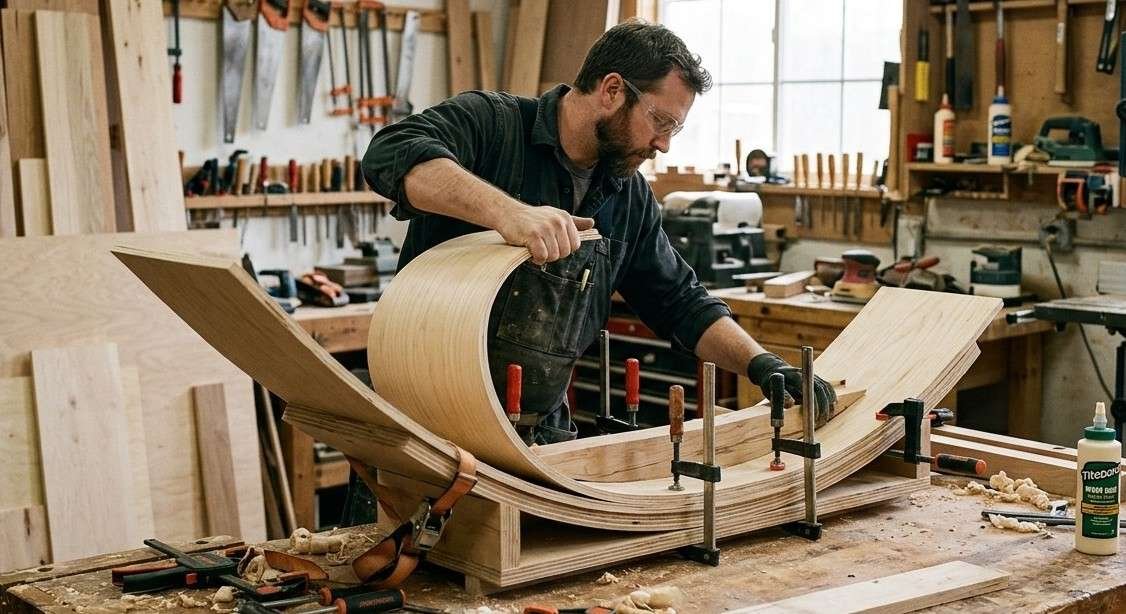
Steam bending uses heat and moisture to soften wood fibers, making plywood more flexible. Place the plywood in a suitable steam box and expose it to steam until it becomes flexible.
Carefully remove the panel and position it against a prepared bending form. Secure it with clamps or straps and allow it to cool and dry while held in place.
Steam bending works best with suitable thin plywood. Test a small piece first because excessive heat or moisture can damage veneers or adhesives.
How to Bend Plywood by Soaking
Moisture can also make thin plywood more flexible. Lightly soak or dampen the panel before gradually bending it around a prepared form.
Secure the plywood with clamps and allow it to dry completely. Avoid excessive water because it may cause swelling, delamination, or surface damage. Always test the technique on a spare piece before using the final panel.
How to Bend Plywood Without Breaking It
If you want to know how to bend plywood without breaking, avoid applying too much force at once. Gradual pressure reduces the risk of cracking, splitting, and delamination.
Follow these basic steps:
- Select plywood with a suitable thickness and bending radius.
- Check the grain direction and panel condition.
- Prepare a strong bending form.
- Apply the appropriate moisture or bending method.
- Bend the plywood gradually.
- Secure it with clamps or straps.
- Allow it to dry and stabilize completely.
A properly shaped form helps distribute pressure evenly and creates a more consistent curve.
Kerf Cutting for Bending Plywood
Kerf cutting is a practical method for creating tight curves. Instead of stretching the plywood, shallow parallel cuts are made across the back of the panel to increase flexibility.
Use a saw to create evenly spaced cuts without cutting completely through the sheet. Closer kerf spacing generally allows tighter curves, while deeper cuts increase flexibility but can weaken the panel.
After bending, the kerfed surface can be reinforced or covered depending on the application.
Using Flexible Plywood
Flexible plywood is often the simplest choice for curved projects. It is manufactured specifically for bending and is commonly used for furniture, columns, counters, cabinets, and interior features.
It can often be shaped around a form with less preparation than standard plywood. Flexible plywood is available in different thicknesses and can be finished with veneer, laminate, paint, or other materials.
For projects requiring smooth and consistent curves, bendable plywood can save time and reduce the risk of cracking.
How to Make a Plywood Bending Form
A bending form provides the shape around which plywood is curved. It can be made from plywood, MDF, solid wood, or another rigid material.
Draw the required curve accurately and cut the form to the desired profile. Make sure it is strong enough to withstand clamping pressure.
For repeated projects, a reusable form can improve consistency. Position clamps evenly along the curve to distribute pressure across the plywood.
Common Mistakes When Bending Plywood
Using plywood that is too thick, applying excessive force, or ignoring grain direction can cause cracking or delamination. Removing clamps too early can also cause the plywood to spring back toward its original shape.
Test your technique on a sample piece before bending the final panel. This helps you determine the appropriate pressure, moisture level, kerf spacing, and drying time.
Applications of Bent Plywood
Bent plywood is commonly used for curved chairs, tables, cabinets, shelving, wall panels, counters, arches, and decorative interior features.
Its combination of strength, relatively low weight, and flexibility makes it useful for both functional and decorative curved structures.
Final Thoughts
Learning how to bend plywood provides more design options for furniture, cabinetry, construction, and DIY projects. The right technique depends on the plywood type, thickness, desired curve, and required finish.
For gentle curves, moisture and controlled pressure may work well. Kerf cutting is useful for tighter curves, while flexible plywood is often the easiest option for demanding designs. For quality materials and construction supplies, Reality Building Materials Trading is a reliable building materials supplier in UAE Dubai, offering plywood and other wood and timber products for different project needs. Contact Now to discuss your material requirements.
Keep Reading More Construction & Industrial Guides
- The Complete Guide to Prefab Construction Materials: See how prefab building systems often combine with glass wool for faster, energy efficient construction.
- What is Vinyl Flooring? Benefits, Types & Uses: Discover a durable flooring option that pairs well with insulated subfloors and walls.
- Asian Paints Berger Suppliers and Dealers in UAE: Explore trusted paint finishes that pair well with insulated walls and interiors.
- Corded Drill vs Cordless Drill: Which One Fits Your Project?: Find the right tool for cutting and fixing glass wool panels during installation.
- MDF vs Plywood for UAE Construction: Which One Is Better?: Compare board materials often used alongside insulation in wall and ceiling systems