Waterproofing is one of the most critical aspects of modern construction in the UAE, where extreme heat, humidity, and occasional heavy rainfall can severely impact building durability. Without proper waterproofing systems, structures are exposed to water infiltration, concrete deterioration, mold growth, and costly long-term repairs.
This guide explains the key waterproofing materials, techniques, and best practices used across residential, commercial, and industrial projects in the UAE.
Why is Waterproofing Essential in the UAE?
The UAE climate presents unique challenges for construction. High temperatures cause thermal expansion and contraction in building materials, while coastal humidity increases the risk of moisture penetration. In addition, sudden rainstorms can expose weak construction points, especially in roofs, basements, and foundations.
Proper waterproofing ensures:
- Protection of structural integrity
- Prevention of cracks and leakage
- Increased lifespan of buildings
- Reduced maintenance costs
- Improved indoor air quality
Because of these factors, waterproofing is not an optional layer, it is a core requirement in modern UAE construction standards.
Common Waterproofing Materials Used in UAE
A wide range of materials is used depending on the structure type and exposure conditions. The most commonly used waterproofing materials include:
1. Bituminous Membranes
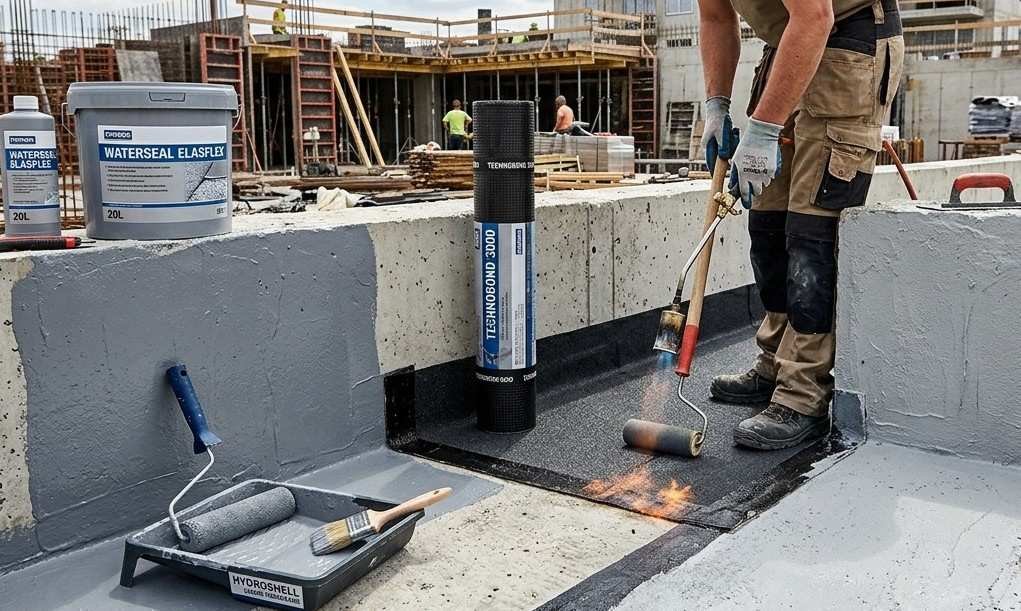
Bituminous membrane sheets are widely used for roofing and foundation waterproofing. They are highly resistant to water and provide excellent adhesion to concrete surfaces. These membranes are often reinforced with polyester for added durability.
2. Liquid Waterproofing Membranes
Liquid-applied membranes are popular for complex surfaces. Once applied, they form a seamless protective layer that prevents water penetration. They are ideal for roofs, terraces, and wet areas like bathrooms.
For high-performance liquid systems widely used in UAE projects, many contractors prefer polyurethane liquid membrane for its excellent flexibility, UV resistance, and long-lasting waterproofing protection.
3. Cementitious Waterproofing
This is one of the easiest methods to apply and is commonly used for internal wet areas such as kitchens, toilets, and water tanks. It bonds well with concrete and provides a rigid waterproof layer.
For strong adhesion and reliable internal waterproofing performance, weber cementitious waterproofing is a trusted solution used in residential and commercial construction across the UAE.
4. Polyurethane Coatings
Polyurethane-based waterproofing systems offer high flexibility and strong resistance to UV rays, making them suitable for exposed roofs and podium decks.
5. Crystalline Waterproofing Systems
These materials react with water and concrete to form crystals that block water pathways. They are highly effective for basements, tunnels, and underground structures.
Key Waterproofing Techniques in Construction
Different structures require different waterproofing techniques. Below are the most widely used methods in UAE construction projects:
1. Positive Side Waterproofing
This technique is applied on the side where water pressure is directly present, such as roofs and external walls. It is the most effective and commonly used method.
2. Negative Side Waterproofing
Used when access to the external side is not possible, such as basement interiors. It prevents water from entering but is generally considered a secondary solution.
3. Integral Waterproofing
In this method, waterproofing compounds are mixed directly into concrete during batching. It improves the overall resistance of the structure.
4. Sheet Membrane Installation
Pre-formed sheets are installed on surfaces to create a continuous waterproof barrier. This method is highly reliable for large infrastructure projects.
5. Injection Grouting
Used for repairing leaks and cracks, this technique involves injecting waterproof chemicals into structural cracks to seal water entry points permanently.
Applications of Waterproofing in UAE Projects
Waterproofing is used in almost every type of construction project, including:
- Residential villas and apartments
- Commercial towers and office buildings
- Parking basements and podium decks
- Swimming pools and water tanks
- Bridges, tunnels, and infrastructure projects
Each application requires a customized approach based on exposure level, water pressure, and structural design.
Factors to Consider When Choosing Waterproofing Systems
Selecting the right waterproofing system is crucial for long-term performance. Key considerations include:
- Type of structure and usage
- Environmental conditions (heat, humidity, rainfall)
- Surface material (concrete, steel, masonry)
- Budget and project timeline
- Expected water pressure levels
A professional assessment is always recommended to avoid failures and ensure compliance with UAE construction standards.
Importance of Quality Chemicals in Waterproofing Systems
Waterproofing performance is not only dependent on membranes but also on the quality of chemical additives and compounds used in the system. These chemicals enhance bonding, flexibility, curing time, and resistance to environmental stress.
Working with a trusted waterproofing chemicals supplier in UAE ensures that contractors receive advanced formulations that improve durability and extend the lifespan of waterproofing applications in both residential and industrial projects.
Role of Suppliers in Quality Waterproofing Solutions
Choosing the right supplier plays a major role in ensuring long-lasting waterproofing performance. High-quality materials, technical support, and proper system recommendations can significantly improve project outcomes.
A reliable waterproofing materials supplier in UAE ensures access to certified products that meet international construction standards and suit the region’s demanding climate conditions.
Best Practices for Long-Lasting Waterproofing
To ensure durability and performance, follow these best practices:
- Always prepare the surface properly before application
- Ensure correct thickness of waterproofing layers
- Use compatible materials from the same system
- Conduct water ponding tests after application
- Carry out regular inspections and maintenance
Proper installation is just as important as material quality. Even the best products can fail if applied incorrectly.
Conclusion
Effective waterproofing in the UAE protects buildings from moisture damage, structural weakening, and long-term maintenance issues using membranes, coatings, cementitious systems, and chemical treatments. Its success depends on proper material selection, surface preparation, correct application techniques, and choosing the right system for areas like roofs, basements, and wet zones.
Ready to Strengthen Your Waterproofing System?
Whether you are working on residential, commercial, or large-scale construction projects, selecting the right waterproofing materials and techniques is key to ensuring durability and performance in UAE conditions. Reality Building Materials Trading LLC provides trusted waterproofing solutions designed to meet the demands of modern construction, delivering long-lasting protection and reliable quality across all project types.
Contact our trusted waterproofing contractors today for expert solutions, reliable application, and long-lasting protection tailored to your construction project needs.
Keep Reading More Construction & Industrial Guides
- Gypsum Board: Types, Benefits & Uses in Modern Construction: Learn how gypsum boards are used for efficient interior construction.
- Cement Boards vs Gypsum Boards: Which Is Better?: Compare durability, cost, and performance to choose the right material.
- Essential Power Tools Every Handyman Needs in Dubai: Discover must-have tools for efficient construction and repair work.
- What Are Pneumatic Tools & How Do They Work?: Understand how pneumatic tools function and where they are used.
- What Is Glass Wool Insulation? Types, Uses, Benefits & Cost Guide: Complete guide to glass wool insulation, its types, benefits, and costs.