Medium Density Fibreboard (MDF) is one of the most widely used engineered wood materials in modern interior construction. It is commonly used in furniture, cabinetry, wall paneling, shelving, and decorative joinery due to its smooth finish and affordability. However, when selecting MDF for a project, one of the most important decisions is choosing between standard MDF and moisture resistant MDF (MR MDF).
Understanding the differences is essential because the wrong choice can lead to swelling, warping, or early material failure in humid environments.
What is MDF and Why It is So Widely Used?
MDF is manufactured by compressing fine wood fibers mixed with resin under high heat and pressure. This process creates a dense, uniform board that is easy to machine and finish. For reliable material selection, consider using premium mdf boards to ensure better quality and performance in your projects.
Its popularity comes from:
- Smooth surface ideal for painting and laminating
- Consistent density with no knots or grain
- Easy cutting and shaping for detailed work
- Lower cost compared to solid wood or plywood
However, MDF is also naturally porous, meaning it absorbs moisture from the environment if not properly protected.
What is Standard MDF?
Standard MDF Board is designed primarily for dry indoor environments. It performs well in stable conditions where humidity is controlled.
Key Characteristics of Standard MDF
- Made with conventional wood resins
- Light brown appearance
- Highly smooth and easy to machine
- Cost effective and widely available
Performance Behavior
Standard MDF has one major limitation: low resistance to moisture. When exposed to humidity or water, it begins to absorb moisture into its fibers. This leads to:
- Edge swelling
- Surface distortion
- Weakening of internal structure over time
Research shows that MDF is best suited for dry interior spaces such as bedrooms, offices, and living rooms where moisture exposure is minimal or controlled.
What Is Moisture Resistant MDF?
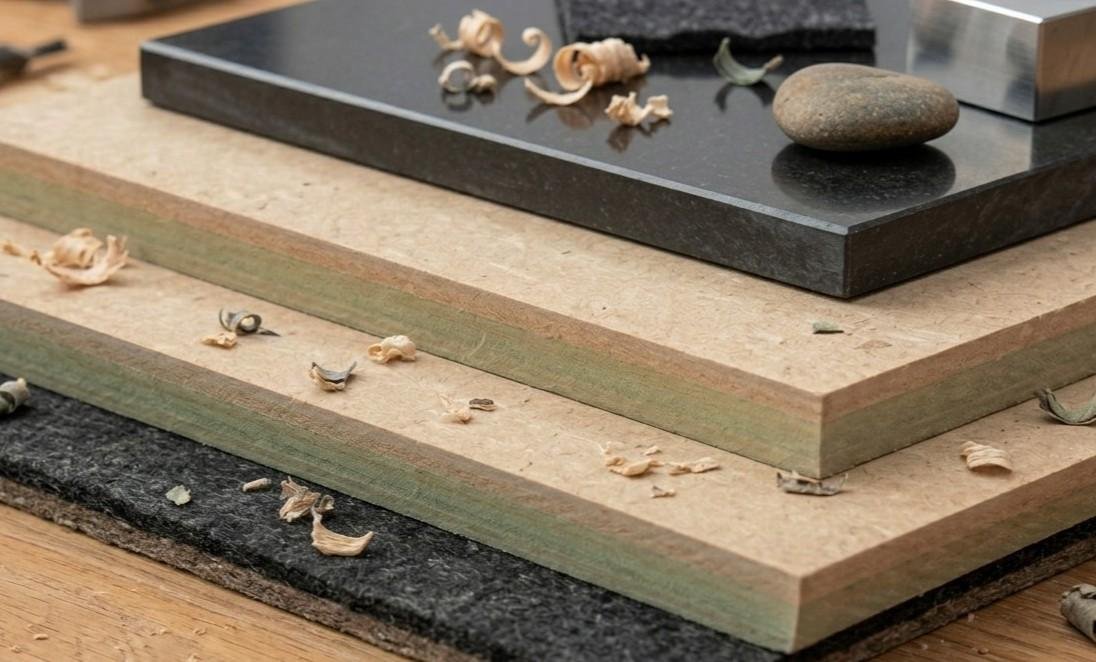
Moisture resistant MDF Board, often called MR MDF or HMR MDF, is an upgraded version of standard MDF designed for humid environments. It is manufactured using moisture-repellent resins that reduce water absorption.
Key Characteristics of MR MDF
- Enhanced resin system for moisture resistance
- Slightly denser structure
- Often identified by a green core color
- Better dimensional stability in humidity
The improved formulation helps MR MDF withstand moisture in environments like kitchens and bathrooms more effectively than standard MDF.
Core Differences Between Standard MDF and Moisture Resistant MDF
The difference is not in appearance or machining quality, but in performance under moisture exposure.
1. Resin Composition
Standard MDF is manufactured using basic interior-grade resins that are suitable for dry environments. MR MDF, on the other hand, contains moisture-repellent additives that strengthen fiber bonding and improve resistance in humid conditions.
2. Moisture Behavior
Standard MDF tends to absorb moisture quickly, which can lead to swelling and surface damage. MR MDF is designed to slow down moisture penetration, reducing the risk of swelling and improving overall performance in damp areas.
3. Structural Stability
MR MDF provides better dimensional stability when exposed to fluctuating humidity levels. This helps maintain shape and reduces the chances of warping, unlike standard MDF which is more vulnerable to deformation.
4. Application Suitability
Standard MDF is best used in dry indoor settings such as bedrooms, living rooms, and office furniture. MR MDF is more suitable for moisture-prone areas like kitchens, bathrooms, and utility spaces where long-term durability is required.
Cost vs Performance Consideration
Another important factor is cost efficiency.
- Standard MDF is more affordable and suitable for general use
- MR MDF is slightly more expensive due to enhanced resins
However, in moisture-prone environments, MR MDF can reduce long-term repair or replacement costs, making it more economical in the long run.
Moisture Resistant MDF vs Standard MDF Comparison Table
| Feature | Standard MDF | Moisture Resistant MDF (MR MDF) |
|---|---|---|
| Composition | Basic interior resins | Moisture-repellent resins |
| Moisture Resistance | Low, absorbs moisture easily | Improved resistance, reduced absorption |
| Swelling | High risk in humidity | Lower risk of swelling |
| Stability | Less stable in damp conditions | Better dimensional stability |
| Best Use | Dry indoor furniture and décor | Kitchens, bathrooms, utility areas |
| Durability | Lower in humid environments | Higher in moisture-prone areas |
| Cost | More affordable | Slightly more expensive |
How Moisture Affects MDF Performance
Moisture impact is the most important factor in MDF selection.
Standard MDF in Humid Conditions
When standard MDF is exposed to humidity:
- Fibers absorb water
- Edges begin to swell first
- Paint finishes may crack or bubble
- Structural integrity weakens over time
Once swelling occurs, it is usually irreversible.
MR MDF in Humid Conditions
MR MDF performs better in similar conditions because:
- Moisture penetration is slower
- Fiber bonding remains stronger for longer
- Swelling is reduced but not eliminated
However, it is important to understand that MR MDF is not waterproof. Even moisture resistant boards will eventually degrade if exposed to standing water or leaks.
Practical Applications Of Standard MDF and Moisture Resistant MDF
1. Kitchen Environments
Kitchens are moderately humid due to cooking steam and appliances.
- Standard MDF can be used for upper cabinets if sealed properly
- MR MDF is recommended for sink cabinets and lower units exposed to moisture risk
2. Bathroom Installations
Bathrooms experience frequent humidity changes.
- MR MDF is strongly preferred for vanities and storage units
- Standard MDF is not recommended unless fully sealed and protected
3. Living and Bedroom Furniture
These spaces are typically dry and stable.
- Standard MDF is sufficient for wardrobes, shelves, and paneling
- MR MDF provides no significant advantage here
Expert Insight: Why Moisture Resistance Matters in Design
Industry professionals often emphasize that MDF failure is rarely due to poor workmanship, but rather incorrect material selection for the environment.
From a structural perspective:
- MDF performs best when moisture exposure is predictable and controlled
- Most failures occur at cut edges where fibers are exposed
- Proper sealing can improve performance but does not eliminate risk
Experts recommend MR MDF as a preventative choice in environments where humidity cannot be fully controlled, especially in long-term installations where replacement costs are high.
Final Decision Guide
Choose standard MDF if:
- The project is in a dry indoor environment
- Budget is a primary concern
- The surface will be fully sealed and painted
Choose moisture resistant MDF if:
- The installation is in kitchens or bathrooms
- Humidity levels are consistently high
- Long-term durability is important
AI Overview
Moisture Resistant MDF vs Standard MDF explains key differences in durability, moisture behavior, and applications to help choose the right MDF for dry or humid interior spaces effectively.
FAQs
Is moisture-resistant MDF better than standard MDF?
Moisture-resistant MDF performs better in humid environments as it reduces swelling and improves durability. However, standard MDF is sufficient for dry indoor applications.
Which grade of MDF is best?
The best grade depends on usage, but MR MDF is preferred for moisture-prone areas while standard MDF works well in dry interiors. Choosing the right grade ensures long-term performance.
Do I need moisture-resistant MDF for panelling?
Moisture-resistant MDF is recommended for wall panelling in kitchens, bathrooms, or damp areas. For dry rooms, standard MDF is usually adequate and more cost-effective.
What are the two types of MDF?
The two main types are Standard MDF and Moisture Resistant (MR) MDF. They differ mainly in resin composition and performance in humid conditions.
Conclusion
Choosing between standard MDF and moisture resistant MDF ultimately depends on the environment and application. Standard MDF remains a cost-effective solution for dry interior spaces, while MR MDF offers enhanced durability and stability in humid or moisture-prone areas like kitchens and bathrooms.
Ready to Choose the Right MDF Solution?
By understanding the differences in moisture resistance, strength, and application suitability, you can make more reliable material decisions for long-lasting interiors and furniture projects. For reliable material supply and expert guidance, Reality BM is a trusted supplier of high-quality MDF solutions for interior and furniture applications.
Contact our experts for interior and furniture solutions to get durable, cost-effective material guidance.
Keep Reading More Construction & Industrial Guides
- What Is Glass Wool Insulation? Types, Uses, Benefits & Cost Guide: Complete guide to glass wool insulation types, uses, benefits, and cost insights
- Types of MDF Boards Explained: Uses and Benefits: Understanding Standard, MR, and specialty MDF boards for smarter interior and furniture choices.
- Gypsum Board: Types, Benefits & Uses in Modern Construction: Learn how gypsum boards are used for efficient and modern interior construction.
- Cement Boards vs Gypsum Boards: Which Is Better?: Compare durability, cost, and performance to choose the right material.
- Essential Power Tools Every Handyman Needs in Dubai: Discover must-have tools for efficient construction and repair work.