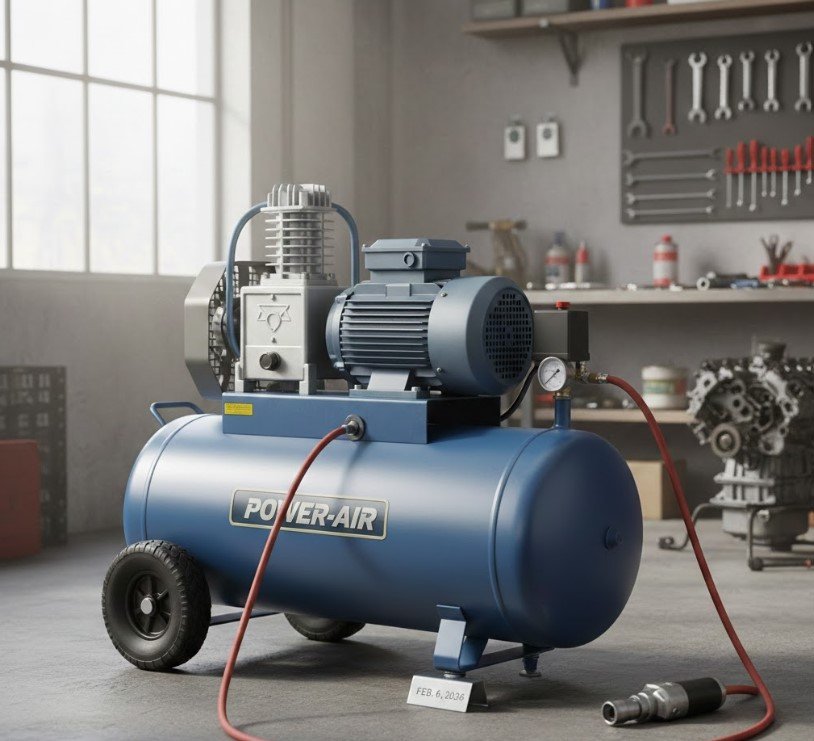
Air compressors are critical machines in modern industry, powering everything from small workshop tools to large-scale manufacturing processes. By converting energy into pressurized air, they provide a reliable and versatile source of power for pneumatic tools, machinery, and industrial systems.
Understanding the different types of air compressors, their industrial applications, and operational advantages is essential for businesses aiming to maximize efficiency, ensure safety, and select the right equipment for their specific needs.
Understanding Air Compressors
An air compressor is a mechanical device that increases the pressure of air by reducing its volume. By storing compressed air in tanks or delivering it directly to pneumatic systems, these machines enable the operation of pneumatic tools, industrial machinery, and HVAC systems.
Compressed air is often referred to as the “fourth utility” in industrial settings, alongside electricity, gas, and water. Its applications span painting, material handling, packaging, mining, and construction, making it an essential component in diverse industries.
How Air Compressors Work
Air compressors operate on principles of thermodynamics and mechanics. They draw in ambient air, compress it using pistons or rotors, and store it at high pressure in a tank for later use. Some compressors provide continuous airflow, while others function intermittently based on demand.
Key components of an air compressor include:
- Compressor pump – mechanically compresses the air
- Pressure tank – stores compressed air for immediate or later use
- Valves and regulators – maintain consistent pressure and airflow
- Motors – typically electric or diesel engines powering the pump
The type of compression mechanism affects the efficiency, noise levels, and suitability of the machine for specific industrial operations.
Types of Air Compressors
Industrial buyers must select air compressors based on flow rate, pressure requirements, and operational conditions. Each type has unique benefits and ideal applications.
1. Reciprocating Air Compressors (Piston Compressors)
Reciprocating compressors, also known as piston compressors, are widely used in small workshops and construction sites. They operate by moving a piston inside a cylinder to compress air, delivering high pressure for intermittent tasks.
Applications
Reciprocating compressors are ideal for automotive repair shops, small manufacturing setups, and construction work. They efficiently power jackhammers, paint sprayers, and nail guns.
Advantages
- High-pressure output (up to 250 psi)
- Durable and easy to maintain
- Suitable for intermittent use
Considerations
- Can be noisy
- Not suitable for continuous, large-scale operations
2. Rotary Screw Air Compressors
Rotary screw compressors are designed for continuous industrial operations. Using two interlocking helical screws, they compress air efficiently and smoothly, making them perfect for medium to large-scale production facilities.
Applications
Rotary screw compressors are widely used in manufacturing plants, food processing, textile production, and pharmaceutical industries. Their continuous airflow supports heavy-duty operations without downtime.
Advantages
- Quiet operation compared to piston compressors
- Continuous duty for large-scale industrial applications
- Lower maintenance requirements due to fewer moving parts
Considerations
- Higher upfront cost
- Requires proper lubrication systems
3. Centrifugal Air Compressors
Centrifugal compressors employ high-speed impellers to accelerate air and convert velocity into pressure. These machines are ideal for operations requiring high-volume airflow, such as chemical processing or large HVAC systems.
Applications
They are commonly used in chemical plants, refineries, and large-scale HVAC systems where continuous, high-volume air supply is critical.
Advantages
- High-volume air output
- Efficient for continuous, heavy-duty operations
- Smooth airflow with minimal vibration
Considerations
- Complex design requiring specialized maintenance
- Higher initial investment
4. Axial Compressors
Axial compressors are high-speed machines primarily used in aviation, power generation, and other large-scale industrial processes. They compress air by passing it through a series of rotating and stationary blades, offering high efficiency for continuous operations.
Applications
Axial compressors are used in industries requiring high-speed, high-volume compression, such as aviation, gas turbines, and energy generation.
Advantages
- Extremely efficient for large-scale operations
- Smooth, continuous airflow
- Suitable for high-speed industrial processes
Considerations
- High complexity and cost
- Requires specialized maintenance and monitoring
Choosing the Right Air Compressor
When selecting an air compressor, buyers should evaluate flow rate (CFM), pressure requirements (PSI), duty cycle, and power source (electric vs diesel). Noise levels, maintenance needs, and operational reliability are equally important.
Partnering with a certified air compressor supplier ensures expert guidance, after-sales support, and access to branded products tailored to specific industrial needs.
Industrial Uses of Air Compressors
Air compressors serve a wide range of industrial applications:
- Manufacturing & Assembly: Powering pneumatic tools, conveyor systems, and robotic arms
- Construction: Running jackhammers, drills, compactors, and concrete spraying equipment
- Automotive: Inflating tires, painting, and operating air-powered tools
- Mining & Drilling: Providing compressed air for drills, ventilation systems, and material transport
- Energy & Petrochemical: Driving pneumatic instruments, gas compression, and pipelines
Industrial users often rely on ISO-approved air compressors that comply with safety standards like ISO 8573 for compressed air quality and long-term operational efficiency.
Maintenance and Safety Tips
Proper maintenance ensures longevity and safe operation. Essential practices include:
- Inspecting filters, hoses, and valves regularly
- Draining condensate from tanks to prevent corrosion
- Lubricating moving parts according to manufacturer guidelines
- Monitoring pressure levels to avoid overloading
- Training staff on safe operation
FAQs
What is an air compressor used for?
An air compressor converts energy into pressurized air to power pneumatic tools, machinery, and industrial equipment efficiently. It’s used in manufacturing, construction, automotive, and HVAC applications.
What are the types of air compressors?
Common types include reciprocating (piston), rotary screw, centrifugal, and axial compressors. Each type suits specific industrial needs based on airflow, pressure, and duty cycle.
How do I choose the right air compressor for my business?
Select based on flow rate (CFM), pressure (PSI), duty cycle, and power source. Consider noise, maintenance, and industrial application requirements.
Can air compressors run continuously?
Rotary screw and centrifugal compressors are ideal for continuous operations. Piston (reciprocating) compressors are better suited for intermittent use.
Conclusion
Air compressors are essential for industrial efficiency, powering a wide range of tools and processes from small workshops to large-scale manufacturing plants. Choosing the right type, whether reciprocating, rotary screw, centrifugal, or axial, depends on factors like airflow, pressure, duty cycle, and application needs.
Understanding their advantages, limitations, and proper maintenance ensures reliable performance and long-term cost savings. For residents and businesses in the UAE, I recommend Reality Building Materials Trading LLC for reliable, high-performance air compressors and expert guidance.
Reach out to our industrial equipment specialists for personalized recommendations, certified products, and fast, hassle-free delivery across the UAE.