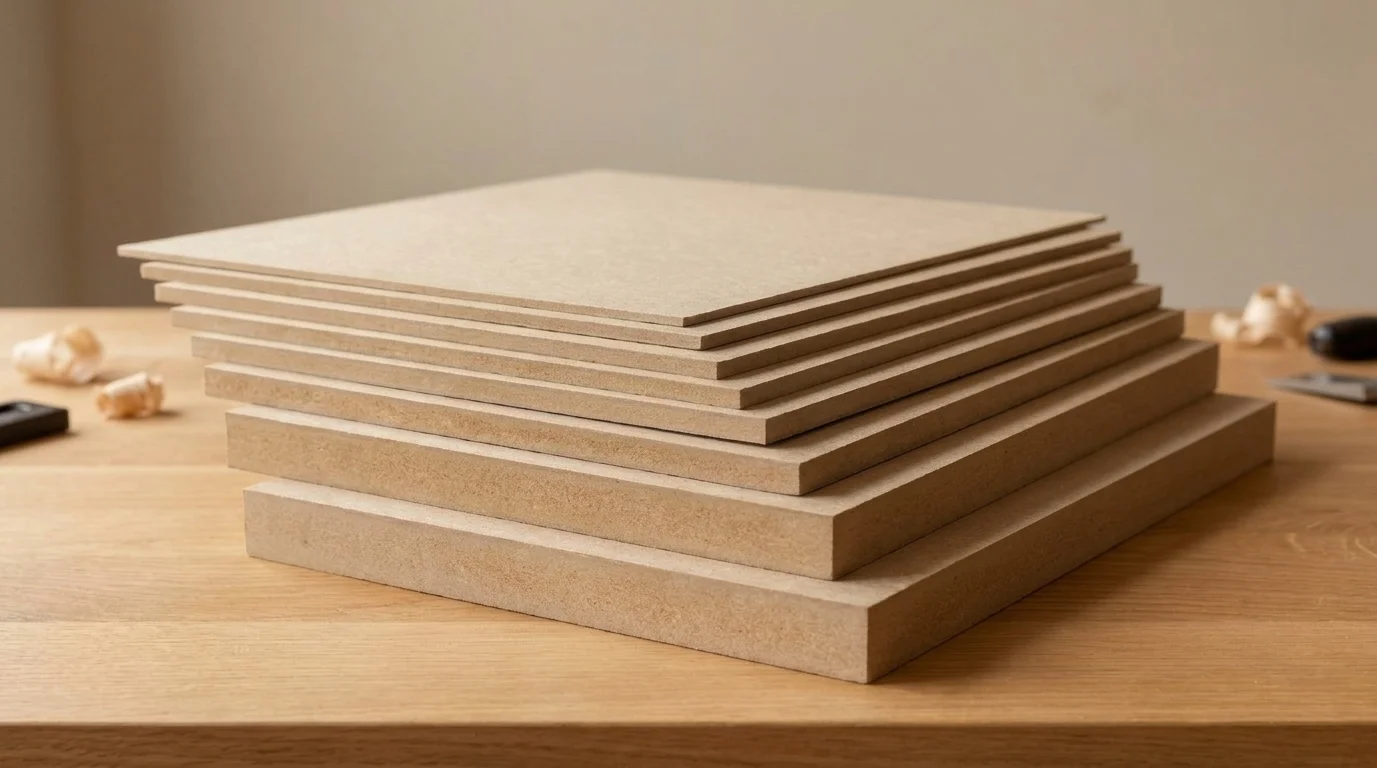
MDF thickness depends on the intended application, required strength, and expected load. Thin MDF boards are suitable for backing panels and decorative work, while thicker boards provide better support for cabinets, furniture, and shelving. Choosing the right thickness helps improve stability, durability, and the overall finish of your project.
Choosing the right MDF thickness is an important part of planning furniture and interior projects. Whether you are making wardrobes, kitchen cabinets, shelves or decorative wall panels, the thickness of the board affects its strength, stability, weight and overall finish. A board that is too thin may bend under pressure, while a thicker option can increase material costs without providing any real benefit.
This MDF thickness guide explains the common board thicknesses, their applications and how to select the right option for different furniture requirements. Understanding these differences before purchasing helps you avoid material wastage and ensures the finished furniture performs as expected.
What Are the Common MDF Board Thicknesses?
MDF boards are available in different thicknesses to suit furniture manufacturing, interior decoration and general joinery work. Common options include 3mm, 6mm, 9mm, 12mm, 15mm, 18mm and 25mm. Each thickness serves a different purpose depending on the amount of support and strength required.
Thin MDF Boards (3mm to 6mm)
Thin MDF boards are lightweight and easy to cut, making them suitable for applications that do not carry heavy loads. They are commonly used where a smooth surface or backing support is more important than structural strength.
Common applications include:
- Wardrobe and cabinet back panels
- Drawer bottoms
- Decorative wall panels
- Furniture backing
- Lightweight interior features
For example, a 3mm board can work well as a wardrobe backing panel when properly fitted into a supporting frame. However, it should not be used for shelves or furniture components that need to carry weight.
Medium MDF Boards (9mm to 12mm)
Medium-thickness MDF offers a balance between weight, workability and rigidity. It is suitable for decorative furniture components and interior applications where moderate support is required.
Typical applications include:
- Wall panelling and decorative partitions
- Lightweight cupboard components
- Drawer sides
- Decorative furniture panels
- CNC-cut designs and interior features
A 12mm MDF board is useful for decorative panels and smaller furniture components. However, its suitability for shelving depends on the shelf length, load and support arrangement.
Standard MDF Boards (15mm to 18mm)
Boards between 15mm and 18mm are commonly used in furniture manufacturing. They provide a more substantial panel for cabinet components, wardrobe shutters, desks and shelving.
Common applications include:
- Wardrobe shutters and panels
- Cabinet doors and carcasses
- Study tables and office furniture
- Bookshelves with suitable support
- TV units and storage furniture
An 18mm MDF board is a practical choice for many general furniture applications. It provides a solid surface for fittings and finishing while offering better rigidity than thinner boards.
Thick MDF Boards (22mm to 25mm)
Thicker MDF boards are suitable for furniture components that need additional rigidity or a heavier appearance. They are often selected for wider surfaces and furniture designs where a thicker edge profile is required.
Typical applications include:
- Heavy-duty shelving
- Desk and table tops
- Work surfaces
- Display furniture
- Decorative furniture features
However, thickness alone does not guarantee that a board will support every load. Long spans still require proper reinforcement or additional supports.
MDF Thickness Chart and Their Applications
An MDF thickness chart makes it easier to compare available options before preparing a furniture cutting list. The following table provides general application guidance.
| MDF Thickness | Common Applications | Main Consideration |
| 3mm | Drawer bottoms and back panels | Non-load-bearing use |
| 6mm | Cabinet backs and decorative panels | Requires suitable support |
| 9mm | Wall panelling and light partitions | Suitable for light applications |
| 12mm | Decorative furniture and smaller panels | Check shelf span and load |
| 15mm | Furniture components and cupboard panels | Balanced weight and rigidity |
| 18mm | Wardrobes, cabinets and furniture | Common general-purpose furniture choice |
| 22mm | Heavy shelves and thicker furniture tops | Additional rigidity |
| 25mm | Worktops and heavy-duty furniture surfaces | Consider weight and fixing requirements |
These recommendations are general starting points rather than guaranteed load ratings. Actual performance depends on the MDF grade, density, panel dimensions, fixing method and manufacturer specifications.
How to Choose MDF Thickness for Different Furniture?
The best MDF thickness depends on the purpose of the furniture and how it will be used. A wardrobe backing panel has different requirements from a desk top or a bookshelf carrying heavy items.
What MDF Thickness Is Best for Wardrobes?
For wardrobe shutters and main furniture panels, 18mm MDF is a common choice because it provides a solid surface for hinges, handles and decorative finishes. Thinner boards can be used for internal backing panels where they do not carry significant loads.
For wardrobe construction, consider:
- 18mm for shutters and main panels.
- 15mm for selected lightweight furniture components.
- 3mm to 6mm for backing panels.
- 12mm for suitable internal components with adequate support.
The final selection should also account for shutter dimensions and hinge specifications.
What MDF Thickness Is Suitable for Kitchen Cabinets?
Kitchen cabinets require careful material selection because they are exposed to humidity, temperature changes and occasional water contact. For cabinet carcasses and shutters, 18mm moisture-resistant MDF can be considered where the manufacturer approves it for the intended application.
Thinner boards may be suitable for internal panels, but areas near sinks and plumbing need additional protection. Moisture-resistant MDF is not waterproof, so exposed edges and surfaces must be properly finished.
What MDF Thickness Works for Shelves?
Shelf thickness depends on the distance between supports and the weight the shelf needs to carry. A short decorative shelf has different requirements from a long bookshelf filled with heavy items.
As a general starting point:
- 12mm for small decorative shelves carrying light items with suitable support.
- 18mm for general-purpose shelves with shorter spans.
- 22mm to 25mm for applications requiring additional stiffness.
For longer shelves, adding a centre support, bracket or reinforcing strip can help reduce bending. Do not select thickness based on appearance alone.
Which MDF Thickness Is Best for Wall Panelling?
Wall panelling usually requires less structural strength than furniture. Boards between 6mm and 12mm are commonly suitable for decorative wall applications, depending on the design and fixing method.
Thinner boards are easier to handle and cut, while thicker boards provide more depth for grooves and decorative profiles. For CNC designs, the required cutting depth should also be considered before selecting the board.
What Factors Affect MDF Thickness Selection?
Selecting the right thickness involves more than comparing measurements. Several practical factors determine how a board performs after installation.
Load and Shelf Span
The weight placed on a board affects how much support it needs. A shelf carrying books, equipment or storage boxes requires more consideration than a decorative display shelf.
The distance between supports is equally important. A wider unsupported span increases the possibility of bending, even when using a thicker board.
MDF Grade and Moisture Resistance
Thickness and grade are two separate considerations. Standard MDF is generally intended for dry interior conditions, while moisture-resistant MDF is designed for more humid interior environments.
For kitchens, utility areas and other moisture-prone spaces, check the board’s specified grade before purchasing. Even moisture-resistant MDF requires proper edge sealing and should not be treated as waterproof.
Finishing and Installation Requirements
The intended finish can also influence the thickness you choose. Painted furniture, laminated surfaces and CNC designs may require different panel dimensions.
Consider the following before finalising your material:
- Whether the board will receive paint, laminate or veneer.
- The depth required for CNC routing.
- The type of screws, hinges and fittings being used.
- The available space for edge banding.
- The method of supporting and fixing the board.
For painted furniture, plain MDF provides a smooth and uniform surface that is suitable for finishing.
Where Can You Find Suitable MDF Boards?
Once you have decided on the required thickness and grade, compare the available board options before finalising your purchase. Reliable MDF suppliers can help you check available thicknesses, board specifications and suitable options for your furniture or interior requirements.
Before placing an order, confirm the following details:
- Available board thicknesses and sheet dimensions.
- Standard or moisture-resistant MDF grade.
- Surface finish and intended application.
- Brand specifications and product availability.
- Quantity required for your cutting plan.
Checking these details beforehand helps you select the right material and avoid unnecessary changes during furniture production.
Common Mistakes When Choosing MDF Thickness
Choosing the wrong board can lead to unnecessary expenses, poor furniture performance and installation problems. Some common mistakes are easy to avoid with proper planning.
Choosing a thicker board for every application: A 25mm board is not necessary for a cabinet backing panel. Match the thickness to the actual purpose.
Ignoring shelf support: Even an 18mm shelf can sag when it carries excessive weight over a long unsupported span.
Confusing moisture resistance with waterproofing: MR MDF offers improved resistance to humidity but does not make the board suitable for continuous water exposure.
Using unsuitable screws: MDF edges can split or lose fixing strength when screws are installed incorrectly. Pre-drilling and suitable hardware help reduce this risk.
Ignoring the actual board dimensions: Always confirm the available thickness and sheet dimensions with the supplier before preparing a cutting plan.
Tips for Working With MDF Boards
Correct handling and installation help maintain the appearance and performance of MDF furniture. A few basic precautions can prevent damage during fabrication.
- Store MDF sheets flat on a dry and level surface.
- Use sharp cutting tools to achieve clean edges.
- Pre-drill holes before fixing screws near board edges.
- Seal exposed edges before applying paint or other finishes.
- Provide suitable support for shelves and wider furniture panels.
- Use appropriate dust extraction and respiratory protection when cutting MDF.
Fine MDF dust can irritate the respiratory system, so cutting should be carried out with suitable ventilation and dust-control equipment.
Conclusion
Choosing the right MDF thickness comes down to understanding the purpose of the board, the weight it needs to support and the conditions in which it will be installed. Thin boards are suitable for backing and decorative applications, while 12mm to 18mm options cover many furniture and interior requirements. Thicker boards are useful when additional rigidity is needed, provided the design and support system are suitable.
Before purchasing, consider both thickness and board grade to avoid problems with bending, moisture and installation. Reality Building Materials Trading LLC provides MDF board options for different furniture and interior applications.
Find the Right MDF Boards for Your Project
Looking for MDF boards for furniture, cabinets, shelving, or interior applications? Reality Building Materials Trading LLC offers MDF board options to suit different project requirements.
Request an MDF QuoteFrequently Asked Questions
What is the most commonly used MDF thickness for furniture?
18mm MDF is a common choice for wardrobes, cabinet components, furniture panels and general interior applications. Thinner boards are used for backing panels and lighter components, depending on the design.
Is 12mm MDF strong enough for shelves?
12mm MDF can work for small shelves carrying light items when properly supported. For heavier loads or longer shelf spans, consider 18mm MDF or additional support.
Can MDF boards be used in kitchens and bathrooms?
Yes, moisture-resistant MDF can be considered for suitable interior kitchen and bathroom applications. However, it is not waterproof. Proper edge sealing and protection from direct water exposure are essential.
Keep Reading More Construction and Industrial Guides
- Cement Board vs Fiber Cement Board Key Differences Understand how these two related materials differ before you order for your next job.
- What Is Plywood Its Types Uses And Benefits Guide Compare a common substrate material often used alongside cement board on site.
- The Complete Guide to Prefab Construction Materials See how panel based materials like cement board fit into faster prefab builds.
- Top 10 Benefits of Prefabricated Modular Construction Learn how modern building methods pair well with durable board materials.
- Corded Drill vs Cordless Drill Which One Fits Your Project Find the right tool for cutting and fixing cement board on site.