Falls from height remain one of the leading, most preventable causes of serious workplace injury. That’s why safety harness regulations exist. If you work at height, or manage a team that does, understanding these rules isn’t optional — it’s the difference between a safe site and a serious accident.
This guide breaks down the key safety harness standards you need to know, kept simple and practical for supervisors, safety officers, and workers alike.
Why Safety Harness Regulations Matter
A harness is only as good as the standard it meets. Cheap, uncertified gear can fail exactly when you need it most. Regulations set the minimum bar for strength, design, and testing, protecting workers and shielding employers from liability. Knowing the rules also helps you buy the right gear the first time, instead of equipment that doesn’t meet your industry’s requirements.
OSHA Safety Harness Requirements
In the United States, OSHA sets the legal baseline for working at height. Under 29 CFR 1926.502, employers must provide fall protection when workers face a fall of six feet or more in construction. General industry rules kick in at four feet, and these are covered under standard 1910.140 on personal fall protection systems.
Not every country sets a fixed trigger height. In fact, there are no legal requirements for at what height a safety harness is required in some regions, since local rules focus on risk assessment instead. Always check your local regulations rather than assuming one global threshold applies.
Key OSHA harness requirements include:
- Full-body harnesses are required for fall arrest systems. Body belts are no longer allowed for this purpose.
- Anchor points must support at least 5,000 pounds per worker attached.
- Harnesses must limit free fall distance to six feet or less.
- Regular inspection before each use is mandatory.
OSHA doesn’t design the harness itself. Instead, it points to consensus standards like ANSI for technical specifications. Employers who ignore these thresholds risk citations, fines, and, far worse, preventable injuries on their crew.
ANSI Z359 Fall Protection Standard
The ANSI Z359 fall protection standard is the technical backbone behind most harnesses sold in North America, covering everything from harness design to anchorage connectors.
Important parts include:
- Z359.1 – Safety requirements for personal fall arrest systems.
- Z359.11 – Specific requirements for full-body harnesses.
- Z359.13 – Standards for energy absorbers and lanyards.
- Z359.18 – Testing requirements for anchorage connectors.
ANSI-certified harnesses go through rigorous drop testing. This confirms they can absorb the shock of a fall without failing.
European Fall Protection Standards (EN 361)
If you work in Europe, or you’re sourcing equipment for an international team, EN 361 is the standard to know. It governs full-body harnesses used for fall arrest across the EU. Safety harnesses require proper certification under EN 361 for fall arrest to ensure impact forces are safely distributed during a fall, protecting the spine rather than concentrating stress on a single point.
EN 361 requires harnesses to:
- Withstand a static load test without breaking.
- Include a dorsal (back) and sternal (chest) attachment point.
- Keep the wearer upright after a fall, reducing injury risk.
You’ll often see EN361, EN358, EN813, and EN362 referenced together, and each covers a different piece of the system: EN 358 for work positioning belts, EN 813 for sit harnesses used in rope access, and EN 362 for the connectors and karabiners that link everything together.
Canadian and Other International Standards
Canada follows CSA Z259.10, similar in spirit to ANSI Z359 but with its own testing methods. Australia and New Zealand use AS/NZS 1891. Most countries align closely with either the American or European model, so a harness meeting ANSI or EN standards is usually a strong starting point globally. Always confirm local compliance before deploying equipment across borders.
Fall Arrest System Requirements Beyond the Harness
A harness is just one piece of a personal fall arrest system. Regulations also cover:
- Lanyards and connectors – Must be rated for the intended load and compatible with the harness.
- Anchor points – Must be engineered or rated for fall arrest, not just convenient tie-off spots.
- Deceleration devices – Must limit arresting force to 1,800 pounds under OSHA rules.
Skipping any single component undermines the whole system, even when the harness is compliant.
How a Full-Body Harness Works
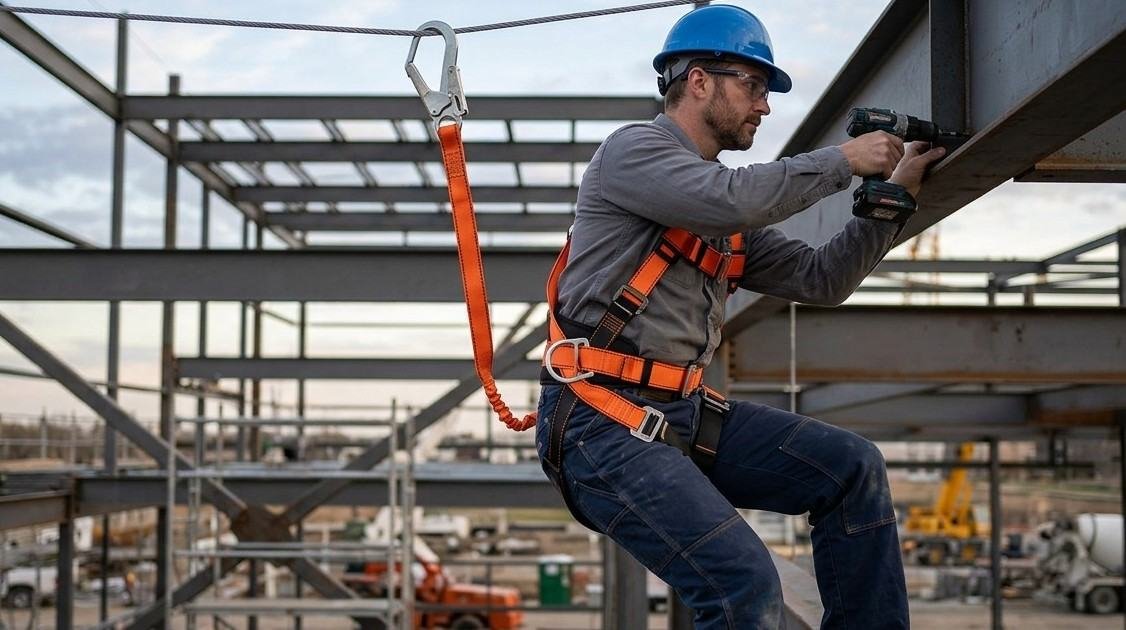
Learn how full-body safety harnesses work and compliance starts to make more sense. A harness spreads the force of a fall across the thighs, pelvis, chest, and shoulders instead of the waist alone, which is why body belts were phased out. A single point of contact around the waist can cause serious internal injury, while a full-body design keeps forces distributed and the wearer upright.
Fit matters as much as certification. Learn the correct way to wear a safety harness before you clip in: straps should sit flat with no twists, the dorsal D-ring should sit between the shoulder blades, and leg straps need to be snug without cutting off circulation. A harness that’s too loose defeats the purpose of every regulation above.
Harness Inspection and Certification Rules
Most standards require a “competent person” to inspect harnesses regularly, with a pre-use check before every shift. Look for:
- Frayed or cut webbing
- Damaged stitching
- Corroded or bent hardware
- Signs of chemical exposure or UV damage
Manufacturers usually recommend replacing a harness after a fall event, even without visible damage. Certification labels and inspection tags should always be legible and current.
Staying Compliant: Practical Tips
Compliance is an ongoing responsibility, not a one-time purchase. Here’s how to stay on top of it:
- Train workers on proper harness fitting and use.
- Schedule routine equipment inspections and document them.
- Replace gear on manufacturer-recommended cycles.
- Keep up with regulation updates, since standards are revised periodically.
- Choose suppliers who provide clear certification documentation.
Final Thoughts
Safety harness regulations exist for one reason: to keep workers alive. Whether you’re following OSHA, ANSI Z359, EN 361, or another regional standard, the goal is the same. Choose certified equipment, inspect it often, and train your team properly.
Standards evolve as technology and research improve. Review your equipment policy at least once a year, and treat every regulation update as a chance to raise your safety bar, not just a compliance checkbox.
At Reality Building Materials Trading LLC, we supply certified fall protection equipment that meets OSHA, ANSI, and EN standards, so your team stays compliant without the guesswork. If you’re unsure which harness fits your requirements, contact our team and we’ll help you find the right certified gear for your site.
Related Products
- Safety Harness – Certified fall protection, built for compliance and comfort on the job.
- 3M 1452L/XL AMEBA L/XL 310 lb Capacity – Heavy-duty full-body harness for reliable fall arrest on demanding sites.