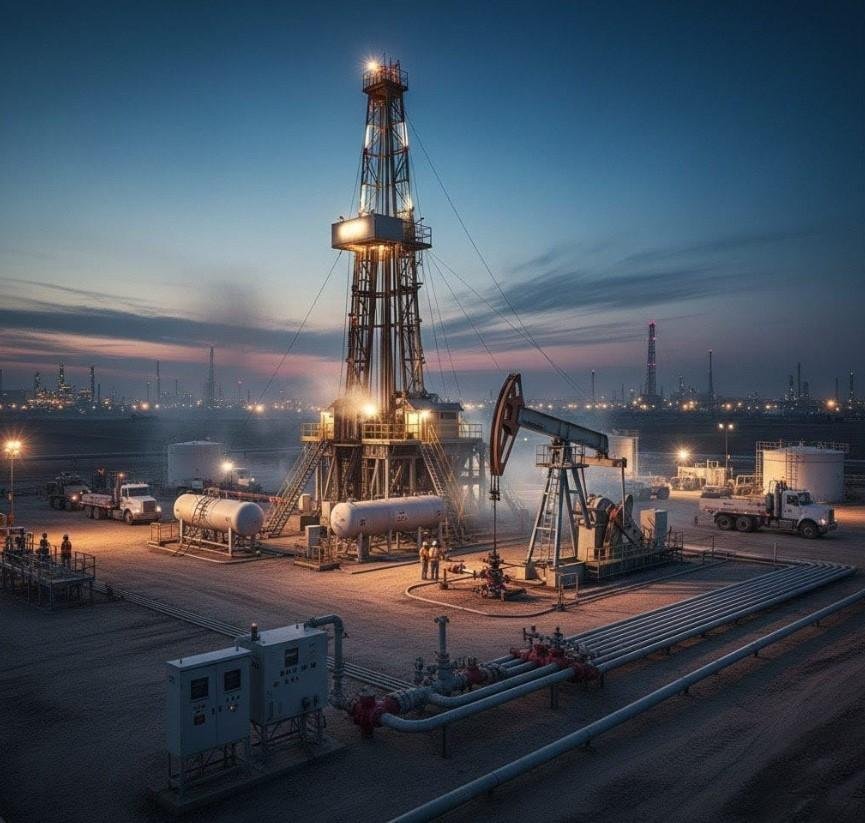
Oil and gas extraction depends on specialized machinery designed to perform under extreme pressure, temperature, and environmental conditions. From drilling rigs to safety systems, oilfield equipment forms the backbone of upstream operations and directly impacts productivity, worker safety, and operational costs.
Oilfield components such as valves, fittings, flanges, and sealing materials are available under our complete oilfield items category for streamlined procurement and reliable industrial supply.
Understanding how each tool functions, where it is used, and how to choose the right equipment helps engineers, procurement teams, and field supervisors make informed investment decisions that improve efficiency and reduce downtime.
What Is Oilfield Equipment and Why It Is Critical for Operations
Oilfield equipment refers to specialized machinery and systems used for drilling, extraction, processing, and transport of petroleum resources. These tools are engineered for durability and precision in harsh environments such as offshore rigs, deserts, and remote sites.
Major service providers like Schlumberger, Halliburton, and Baker Hughes rely on advanced equipment to maintain safe and efficient operations worldwide. Reliable machinery directly impacts productivity, safety compliance, and project profitability.
Key benefits
- Faster drilling and higher efficiency
- Compliance with American Petroleum Institute standards
- Lower maintenance costs
- Accurate reservoir extraction
Without properly selected equipment, even high potential wells can become economically unviable.
Major Categories of Oilfield Equipment
Oilfield machinery can be grouped into functional categories based on where it operates within the production lifecycle. Understanding these categories simplifies procurement planning and equipment lifecycle management.
Drilling Equipment
Drilling tools are used during the exploration and well creation phase. They penetrate subsurface rock layers to reach hydrocarbon reservoirs and establish a stable wellbore structure for extraction.
Types
- Rotary Drilling Rigs
Heavy duty rigs designed to drill deep wells using rotational force and downward pressure. They integrate mechanical, hydraulic, and electronic systems to maintain drilling stability in demanding geological formations. - Top Drive Systems
Motorized units mounted at the top of the derrick that rotate the drill string directly. They enhance drilling precision, reduce manual handling, and allow continuous drilling without frequent pipe disconnections. - Drill Bits
Cutting tools attached to the drill string that break rock formations during drilling. Different bit designs such as PDC and tricone are engineered to match formation hardness and optimize penetration efficiency. - Mud Pumps
High pressure pumps that circulate drilling fluid through the wellbore during drilling. They cool drill bits, remove cuttings, and stabilize formation pressure to prevent well collapse.
Well Completion Equipment
Completion tools prepare a drilled well for production by reinforcing the wellbore and enabling controlled hydrocarbon flow from reservoir to surface.
Types
- Casing and Tubing Strings
Steel pipe assemblies installed inside the well to maintain structural integrity and isolate formation layers. They prevent contamination between zones and provide a controlled path for fluid production. - Packers and Liners
Downhole devices used to seal spaces between casing and tubing or reinforce sections of the well. They create zonal isolation, allowing operators to manage pressure and production from specific reservoir intervals. - Wellheads and Christmas Trees
Wellheads and Christmas Trees are surface pressure control assemblies that regulate production flow and secure casing strings. These systems rely on durable flanges and industrial sealing Gaskets to maintain leak-proof connections under extreme pressure conditions. - Sand Control Screens
Filtration devices installed downhole to block formation sand from entering production tubing. They protect equipment from erosion and maintain stable production rates over time.
Production Equipment
Production machinery extracts hydrocarbons from underground reservoirs and transports them to the surface for processing and storage.
Types
- Pumpjacks
Mechanical lifting systems that raise oil from wells with low natural pressure. They convert motor rotation into vertical reciprocating motion to draw fluids upward through tubing. - Electric Submersible Pumps
Downhole pumps powered by sealed electric motors designed for high volume fluid lifting. They operate efficiently in deep wells and handle varying production rates. - Gas Lift Systems
Artificial lift systems that inject compressed gas into the tubing string. The gas reduces fluid density, allowing oil to flow upward more easily to the surface. - Separators
Processing vessels that separate oil, gas, and water from produced fluids. They ensure stable flow conditions and prepare hydrocarbons for storage or pipeline transport.
Pressure Control Equipment
Pressure control systems maintain well integrity and prevent dangerous blowouts or uncontrolled fluid releases during drilling and production.
Types
- Blowout Preventers
High pressure safety valves installed at the wellhead to seal the well in emergencies. They stop uncontrolled flow and protect personnel, equipment, and the environment. - Choke Manifolds
Valve assemblies used to regulate fluid flow and reduce pressure safely. They allow operators to maintain controlled well conditions during testing or production. - Control Valves
Precision engineered valves that regulate flow rate, pressure, and temperature. They are essential for maintaining stable operating conditions throughout the production system. - Accumulator Units
Hydraulic systems that store pressurized fluid to activate safety equipment instantly. They provide backup power for critical controls if primary power fails.
Material Handling and Support Equipment
Support machinery ensures safe transportation, lifting, and positioning of heavy oilfield components across drilling and production sites.
Types
- Cranes and Hoists
Lifting machines designed to move heavy loads such as pipes and rig components. They provide controlled movement and positioning accuracy during installation tasks. - Pipe Handling Tools
Mechanized devices that grip and maneuver drill pipes safely. They reduce manual labor, speed up operations, and minimize injury risks for workers. - Hydraulic Winches
Power driven pulling systems used for lifting and tensioning heavy loads. They deliver controlled force and braking capability for demanding field operations. - Transport Trailers
Heavy duty trailers designed to transport oversized oilfield equipment. Their reinforced frames and low bed structures allow safe movement across rough terrain.
Safety and Monitoring Systems
Safety equipment protects personnel, infrastructure, and the environment by detecting hazards and ensuring controlled operations in high risk oilfield environments.
Types
- Gas Detection Systems
Monitoring devices that detect combustible or toxic gases in real time. They provide early warnings that help prevent explosions and health hazards. - Fire Suppression Units
Automated systems designed to extinguish fires rapidly in industrial environments. They deploy extinguishing agents immediately after detecting flames or extreme heat. - Emergency Shutdown Systems
Control systems that automatically halt operations during unsafe conditions. They prevent equipment damage and reduce accident risks by isolating hazardous processes. - Monitoring Sensors
Electronic instruments that measure pressure, temperature, vibration, and flow. They provide continuous operational data that supports predictive maintenance and system optimization.
Applications of Essential Oilfield Equipment
Oilfield equipment is used across multiple operational phases, each requiring specialized tools designed for precision and durability. Understanding these applications helps buyers invest in machinery that aligns with project goals and field conditions.
Exploration and Drilling
Exploration relies on rigs, drill bits, and fluid systems to access subsurface formations and gather geological data. These tools enable engineers to locate viable reserves efficiently and accurately.
Directional drilling technology allows wells to reach distant reservoirs from a single surface site. This method reduces environmental impact and increases production flexibility.
Well Completion and Extraction
Completion equipment prepares wells for production by sealing zones, controlling pressure, and guiding hydrocarbons upward. Properly installed systems ensure stable flow and prevent formation damage.
Artificial lift equipment is widely used in mature wells to maintain production. These systems extend reservoir life and improve recovery rates.
Pressure Control and Safety
Safety equipment prevents uncontrolled releases of gas or oil during drilling and production. Pressure control systems maintain stable operating conditions even in volatile reservoirs.
Blowout preventers, control valves, and monitoring sensors protect personnel and infrastructure. Reliable safety equipment is mandatory for regulatory compliance.
Fluid Processing and Handling
After extraction, separators, pipelines, and storage units manage hydrocarbons safely. These systems prepare resources for refining, transport, and distribution.
Efficient fluid handling reduces waste, improves product quality, and supports environmental standards. This stage is essential for operational profitability.
Quick-connect systems such as aluminium cam lock fittings are widely used in fluid transfer operations to ensure secure and efficient connections between hoses and pipelines.
Maintenance and Intervention
Oilfield equipment also supports inspection, repair, and performance monitoring. Workover rigs and diagnostic tools help maintain productivity throughout its lifecycle.
Preventive maintenance reduces unexpected shutdowns and lowers repair costs. Long term monitoring ensures consistent output and asset reliability.
How to Choose the Right Oilfield Equipment
Selecting equipment requires evaluating operational requirements, environmental conditions, and technical specifications. Buyers should prioritize durability, certifications, and compatibility with existing infrastructure.
Key purchasing considerations include
- Pressure rating and load capacity
- Material strength and corrosion resistance
- Maintenance accessibility
- Spare parts availability
- Manufacturer reputation
Investing in quality oilfield equipment reduces lifecycle costs and improves safety performance. Reliable machinery also enhances productivity and ensures consistent output.
FAQs
What is the most essential oilfield equipment
Drilling rigs are considered the most essential because they initiate well creation and enable resource access. Without them, extraction cannot begin.
How do I choose oilfield equipment suppliers
Evaluate certifications, field experience, and after sales support before purchasing. Reliable suppliers provide documentation, training, and technical guidance.
What equipment improves oilfield safety the most
Blowout preventers and gas detection systems greatly reduce accident risks. They monitor pressure and hazardous gases in real time.
How long does oilfield equipment typically last
Lifespan depends on maintenance, environment, and usage intensity. High quality equipment can operate efficiently for many years with proper servicing.
Final Thoughts
Oilfield equipment is the operational foundation of energy production, influencing efficiency, safety, and profitability across exploration and extraction activities. Understanding equipment categories, applications, and selection criteria allows businesses to invest confidently and optimize long term performance.
For companies seeking dependable industrial solutions in UAE, Reality Building Materials Trading LLC provides trusted equipment options, expert support, and reliable supply tailored to demanding field operations.
Contact our oilfield equipment specialists and upstream services providers for personalized support and fast, dependable assistance with all your project requirements.
Explore Related Guides for Tools, Materials, and Industrial Equipment
- The Complete Hand Tools Guide: Types, Uses & Selection: Master every hand tool for precision, safety, and efficiency.
- What is an Air Compressor? Types and Their Industrial Uses: Learn how different air compressors work and their applications in industrial and workshop settings.
- Choosing the Right Fasteners for Your Construction Project: Understand which fasteners suit specific materials and structural requirements.
- Hand Tools vs. Power Tools: Which One Should You Use?: Compare manual and powered tools to select the best option for your projects.
- Choosing the Right Construction Materials: A Complete Guide: A comprehensive overview of materials selection for safety, durability, and cost-efficiency.