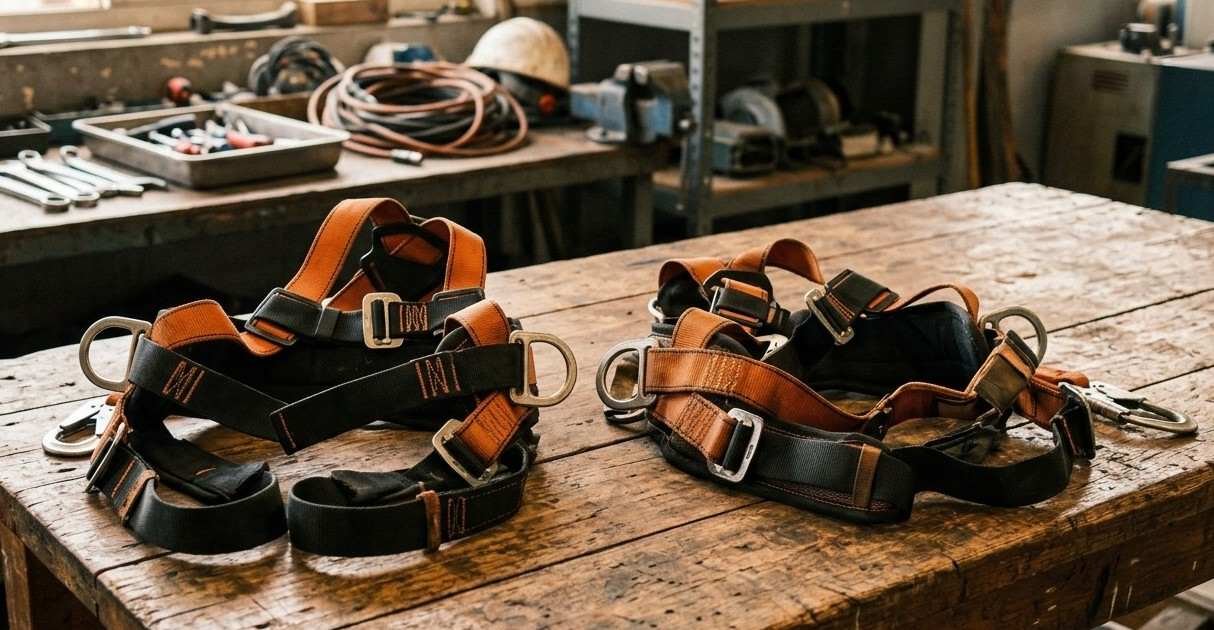
The best safety harness in the UAE is a full-body harness certified to EN 361 or ANSI Z359.11, sized correctly for each worker and matched to the site’s fall hazards. Verify the certification label, anchor point type, heat and UV resistance, and inspection history before you buy.
Safety harnesses in the UAE are mandatory fall protection personal protective equipment (PPE) used heavily in construction, oil and gas, and industrial maintenance. Choosing the right one is a compliance decision, an engineering decision, and a procurement decision at once.
This guide gives site managers and safety officers a practical framework for making that choice.
What Standards Should a Safety Harness in the UAE Meet?
A safety harness in the UAE should comply with EN 361 or ANSI Z359.11 and carry a legible certification label. Regulators such as Dubai Municipality and Abu Dhabi’s OSHAD framework expect certified fall protection under their work-at-height requirements. Always confirm current rules with the relevant authority.
Certification is your baseline. A harness without a traceable label, batch number, and manufacture date should never reach your site.
Pair the harness standard with the matching component standards. Lanyards and energy absorbers fall under EN 355, connectors under EN 362, and self-retracting lifelines under EN 360. A certified harness attached to an uncertified lanyard still leaves a weak link in the system.
Which Type of Safety Harness Suits Your Work?
Match the harness to the task. Fall arrester & suspension harnesses serve different purposes: the first stops a fall in progress, while the second holds a worker in position. Selecting by price alone often puts the wrong equipment on the wrong job.
Common configurations include:
- Full-body fall arrester harness: Dorsal D-ring for general construction and scaffolding.
- Positioning and suspension harness: Side D-rings and a waist belt for rebar, pole, or facade work.
- Ladder and climbing harness: Front or sternal D-ring for vertical access.
- Rescue and confined space harness: Shoulder or dorsal attachments for retrieval systems.
- Flame-retardant harness: Treated webbing for welding, refinery, and hot work.
If your teams switch between tasks, a multi-point harness reduces the number of units you must stock and track.
How Does the UAE Climate Affect Harness Selection?
Heat, UV radiation, dust, and coastal humidity degrade harness materials faster in the UAE than in temperate regions. Choose polyester webbing for better UV resistance, breathable padding for summer comfort, and corrosion-resistant hardware for coastal and offshore sites.
Summer surface temperatures regularly exceed 45°C. Harnesses stored in parked vehicles or direct sun lose strength over time, even if they look intact.
Consider these factors during selection:
- UV exposure: Prolonged sunlight weakens webbing fibers. Look for UV-stabilized materials.
- Humidity and salt: Coastal sites in Abu Dhabi, Fujairah, and Ras Al Khaimah accelerate corrosion. Specify coated or stainless steel buckles and D-rings.
- Sand and dust: Fine particles abrade stitching and jam buckle mechanisms.
- Worker comfort: Padded straps and ventilated back panels improve compliance during long shifts.
A harness that workers find unbearable will be worn loosely or not at all. Comfort is a safety feature.
How Do You Evaluate a Safety Harness Before Buying?
Evaluate every harness against five criteria: certification, fit range, hazard match, environmental durability, and lifecycle support. Scoring each supplier on these points exposes hidden risks such as missing documentation, limited sizing, or no replacement parts.
Use this five-point matrix during procurement:
- Certification: Valid test certificates and notified body details for each model.
- Fit range: Adjustable leg, chest, and shoulder straps covering your workforce’s body sizes.
- Hazard match: Attachment points that suit your anchor type, fall distance, and rescue plan.
- Environment: Materials rated for heat, UV, chemicals, or sparks present on site.
- Lifecycle support: Manufacturer inspection guidance, spare parts, and documented service life.
Apply the same matrix to any safety harness supplier Dubai contractors consider. It prevents most mismatched purchases and gives auditors a clear paper trail.
Also calculate the total fall clearance. The harness, lanyard, and energy absorber must stop a worker before they hit the ground or a lower structure. Short clearance heights often call for self-retracting lifelines rather than standard lanyards.
How Often Should You Inspect a Safety Harness?
Inspect every safety harness before each use and complete a documented inspection at least every six months, or sooner if the manufacturer or site conditions require it. Remove any harness from service immediately after a fall, regardless of visible damage.
Pre-use checks take under two minutes. Look for:
- Cuts, fraying, or glazed webbing
- Loose or broken stitching
- Bent, cracked, or corroded hardware
- Chemical stains or heat damage
- Missing or unreadable labels
Assign each harness a unique ID and log inspections, issue dates, and retirements. Store equipment in a cool, dry, shaded locker away from chemicals and sharp tools.
Follow the manufacturer’s maximum service life, which commonly ranges from five to ten years. Harsh UAE conditions can shorten that window, so treat the figure as a ceiling, not a target.
Final Thoughts on Choosing a Safety Harness in the UAE
The right harness combines verified certification, correct fit, task-specific design, and climate-ready materials, backed by disciplined inspection. Use the five-point matrix to compare suppliers objectively and document every decision.
If you need certified fall protection equipment for your next project, Reality Building Materials Trading can help you select a safety harness in the UAE that fits your site conditions and compliance requirements.
Get the right safety harness for your UAE project
Not sure which harness suits your site, your work at height tasks, or the summer heat? Tell our team about your project and we will recommend the right fall arrester and suspension harnesses, quantities and accessories, with a clear quote and no guesswork.
Request a Safety Harness QuoteFAQ
What is the best type of safety harness for construction work?
A full-body harness with a rear dorsal D-ring, certified to EN 361 or ANSI Z359.11, suits most construction fall arrest tasks. Add side D-rings if workers need positioning support.
How long does a safety harness last?
Most manufacturers specify a service life of five to ten years, but extreme heat, UV, chemicals, or a fall can end it sooner. Follow the manufacturer’s guidance and your inspection records.
Can workers share one safety harness?
Sharing is not recommended. Each harness should be adjusted to one worker, tracked by ID, and inspected regularly, which ensures proper fit and clear accountability.
Keep Reading More Construction and Industrial Guides
- Cement Board vs Fiber Cement Board Key Differences Understand how these two related materials differ before you order for your next job.
- What Is Plywood Its Types Uses And Benefits Guide Compare a common substrate material often used alongside cement board on site.
- The Complete Guide to Prefab Construction Materials See how panel based materials like cement board fit into faster prefab builds.
- Top 10 Benefits of Prefabricated Modular Construction Learn how modern building methods pair well with durable board materials.
- Corded Drill vs Cordless Drill Which One Fits Your Project Find the right tool for cutting and fixing cement board on site.