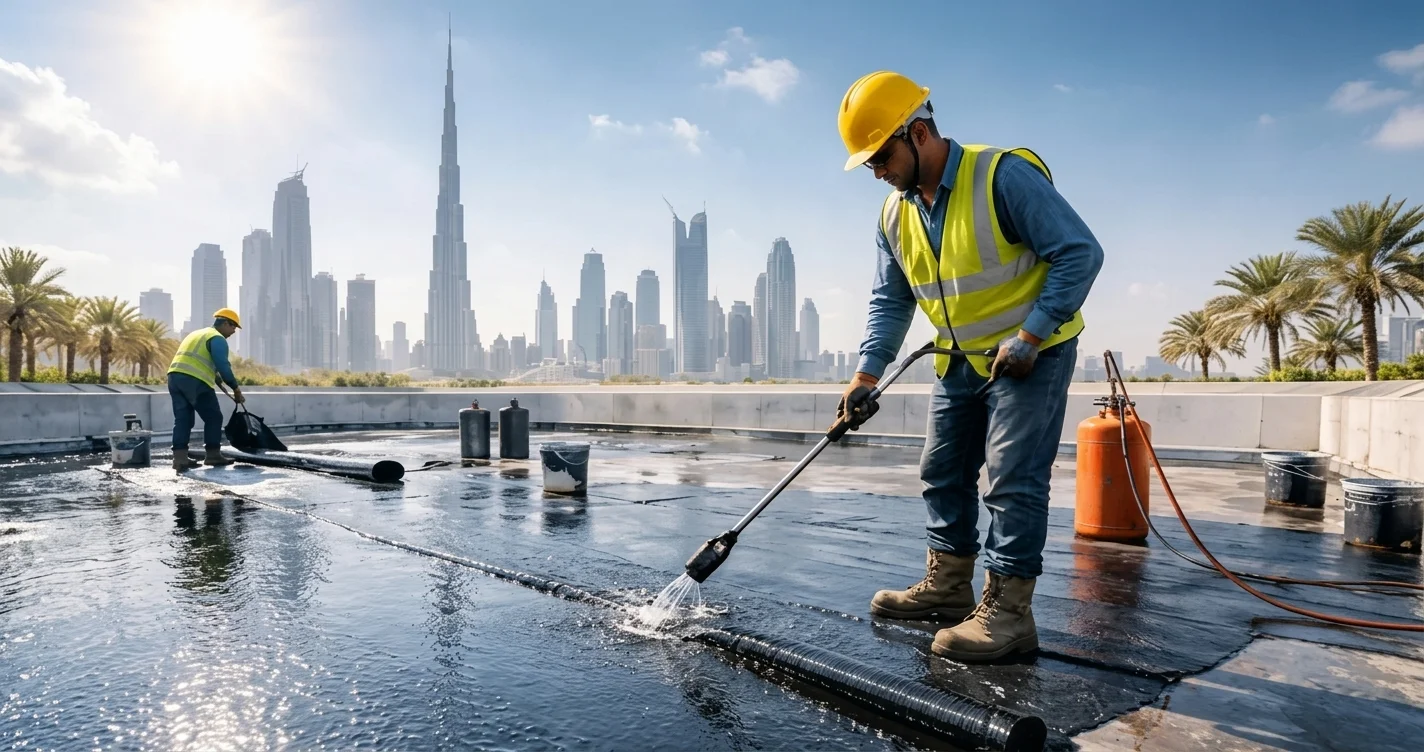
Most waterproofing failures in Dubai buildings come from site errors, not poor products. This guide covers the mistakes that cause leaks, including weak surface preparation, the wrong system for the area, missed joint details, skipped flood tests and damaged membranes. It also gives a simple site checklist and a material guide to help you prevent them.
Dubai buildings deal with strong sun, humid summers and the odd heavy downpour, so a weak waterproofing layer rarely stays hidden for long. Most leaks trace back to the same handful of site errors rather than bad products.
This guide covers the common waterproofing mistakes in Dubai construction projects, why they happen and how contractors, consultants and owners can prevent them. If you manage a villa, tower or warehouse build, you will leave with a clear checklist to use before tiles and finishes go on.
Why Does Waterproofing Fail So Often in Dubai?
Waterproofing fails in Dubai mostly because of installation errors, not defective materials. Heat, UV, humidity and tight construction schedules push crews on site to rush surface preparation, curing and testing, and those small shortcuts turn into leaks within one or two seasons.
Concrete in this region moves every day. A roof slab can run very hot by afternoon and cool quickly at night, and a membrane that cannot follow that movement will crack at its weakest point.
Once water gets in, it travels to the reinforcement and corrosion starts. Rust expands, the concrete cracks from inside, and repair costs climb well above the original waterproofing budget. Product performance is normally tested against standards from bodies like ASTM International, so ask for test data before you approve any system.
What Are the Common Waterproofing Mistakes in Dubai Construction Projects?
The most common mistakes are poor surface preparation, choosing the wrong system, weak detailing at joints and pipes, skipping water tests, damaging the membrane after installation and neglecting maintenance. Each one is preventable with planning, correct sequencing and site checks before finishes cover the work.
Here is a quick view before we go through each one.
| Mistake | Where It Shows Up | What It Leads To |
|---|---|---|
| Skipped surface preparation | Roofs, podiums, wet areas | Peeling and blistering membrane |
| Wrong system for the area | Terraces, tanks, basements | Early failure and repeat repairs |
| Weak joint and pipe detailing | Wall-to-floor corners, drains, sleeves | Leaks at the edges |
| Ignored structural movement | Expansion joints, long slabs | Cracks that open the membrane |
| No flood test | Bathrooms, balconies, roofs | Hidden defects under tiles |
| Later trades damage the layer | Terraces and podium decks | Punctures found after handover |
Mistakes Made Before the Membrane Goes On
Surface preparation is the mistake seen most often on Dubai sites. Dust, laitance, oil or an old coating left on the slab stops the new layer from bonding, and it lifts within a season. Cracks need repairing, and the surface should be clean, sound and at the moisture level the manufacturer allows. Where the data sheet calls for a primer, use it.
System selection is the next trap. A cementitious coating suits internal wet areas but struggles on an exposed roof under UV. A liquid membrane or sheet system handles roofs and movement better, and basement walls need products built for constant water pressure. Choosing whatever was used on the last job ignores exposure, movement and finish.
Structural movement gets ignored as well. Long slabs, parapets and expansion joints need flexible materials and properly formed joint details. A rigid layer over a moving joint will split.
Mistakes Made During Installation
Joints, corners and pipe penetrations fail first. Wall to floor junctions, drain outlets, sleeves and parapet edges need fillets, reinforcement and compatible sealants. A membrane that is perfect across an open terrace but skipped at the parapet will still leak.
Application errors add to this. Fewer coats than specified, a thin film and a rushed next coat over uncured material all cause blisters and weak bonding. Mixing ratios, curing times and temperature limits are printed on the product data sheet for a reason, and midday summer heat can shorten working time quickly.
Ignoring the manufacturer’s instructions sits behind many of these failures. Two crews can apply the same product and get very different results, so the data sheet should be on site and followed step by step.
Mistakes Made After Installation
Skipping the flood test is a costly shortcut. Fill the area with water and leave it for 24 to 48 hours, or as the specification states, then check the room below before tiling. A defect found now costs a patch. Found later, it costs the tiles and the finish.
Other trades also damage good work. Plumbers chase walls, electricians drill and tilers drag tools across the surface. A protection board or screed keeps the membrane intact until finishes go on.
Maintenance matters too. Roof drains clog, sealants age under UV and joints open. A yearly check before the rainy season catches small faults early.
How Can You Prevent Waterproofing Problems on Site?
Prevent waterproofing problems by planning the system before construction, specifying details for every area in writing, and checking each stage on site. Record surface checks, coat thickness, curing time and flood test results with dated photos, so every trade knows the sequence and nothing gets covered before it passes.
Most of the common waterproofing mistakes in Dubai construction projects disappear once these hold points are respected. Use this checklist before any tile or screed goes down.
- Surface is clean, sound and free of cracks
- Slopes run toward the outlets
- Fillets, corners and penetrations are treated
- Specified coats and curing times were followed
- Flood test passed and recorded
- Membrane is protected until finishes go on
Which Waterproofing Materials Suit Dubai Projects?
Material choice depends on the area and the exposure it faces. Cementitious coatings suit internal wet areas, liquid applied polyurethane membranes suit roofs and balconies where movement is expected, bitumen coatings suit basements and below grade work, and sheet systems suit large flat roofs. Always match the product to UV exposure, movement and water pressure.
Sourcing from a waterproofing materials supplier in UAE makes this easier, because you can compare data sheets, ask about approvals and get the primer, membrane and sealant from one source. Mixing products from unrelated brands can create compatibility problems at laps and joints.
Before you place an order, check three things. Confirm the product data sheet lists the temperature and UV limits for your application. Ask whether the system comes with a written warranty. Make sure the supplier can name the primer and sealant that go with the membrane.
Conclusion
Waterproofing fails when it is treated as a finishing touch. The common waterproofing mistakes in Dubai construction projects, from poor surface preparation to skipped flood tests, are all avoidable with the right product, careful detailing and proper checks. Plan the system early, protect it during follow up work and inspect it every year.
If you need materials for your next build, Reality Building Materials Trading LLC supplies waterproofing products for roofs, wet areas and basements. Talk to the team about your project requirements before work begins.
Find the Right Waterproofing Materials for Your Project
Planning waterproofing for a roof, bathroom or basement? Reality Building Materials Trading LLC offers waterproofing products for different site conditions. Contact our team to discuss your project requirements.
FAQs
What is the most common waterproofing mistake in Dubai?
Poor surface preparation is the most common one. Applying a membrane over dust, oil, loose concrete or an old coating stops it from bonding, and it starts to peel or blister.
How long should a waterproofing flood test last?
A flood test usually runs for 24 to 48 hours, unless the product data sheet or project specification says otherwise. Check the ceiling or room below for damp before any tiling starts.
How often should waterproofing be inspected in Dubai?
Inspect it once a year, ideally before the rainy season, and again after any heavy rain. Look closely at drains, joints, sealants and visible cracks.
Keep Reading More Construction and Industrial Guides
- How to Choose the Right MDF Thickness for Your Project Learn how thickness affects strength and finish, so you pick the right board for your next build.
- Air Hose Fittings: A Guide to Sizing, Types & Selection Match hose diameter, thread type and couplers so your compressed air connections stay leak free.
- What Is Plywood Its Types Uses And Benefits Guide Compare a common building material used across workshops, sites and fit out projects.
- Top 10 Benefits of Prefabricated Modular Construction Learn how modern building methods save time and reduce site waste.
- Corded Drill vs Cordless Drill Which One Fits Your Project Find the right tool for your workshop or site, especially if you also run air tools.